
Pesticide-Free Produce Exporters: The Complete Guide for Kenyan Growers and Traders
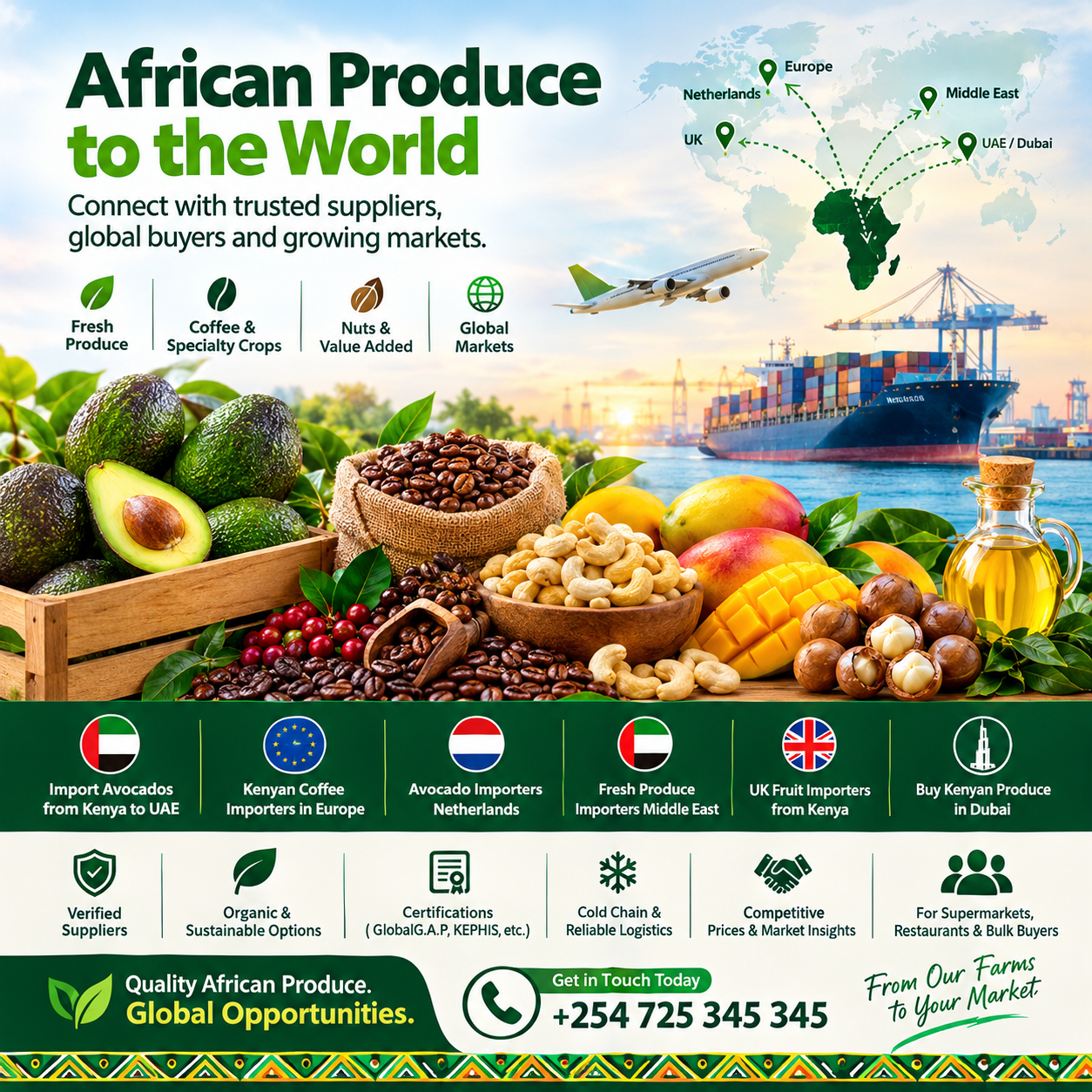
Pesticide-free produce exporters are the businesses riding one of the fastest shifts in global food trade — buyers across Europe, the Gulf, and Britain increasingly want produce grown with zero or minimal pesticide residues, and suppliers who can prove it are winning the contracts. The phrase means different things to different people, and that ambiguity is exactly where unprepared exporters get caught. Some buyers mean fully certified organic, some mean residue-tested produce below strict thresholds, and some mean integrated pest management with documented spraying discipline. This guide unpacks all of it — what the market actually demands, how Kenyan growers and traders can position for it, and the complete pathway from farm practice to premium contracts for anyone building a business as one of the pesticide-free produce exporters.
The commercial logic is straightforward. Export markets have tightened residue limits dramatically over the past decade, and consignments that fail testing get rejected at the border — costing the produce, the freight, and the buyer relationship. The exporters who solve residue control at the source are the ones whose containers keep clearing, which is why the best pesticide-free produce exporters treat the discipline as a business system rather than a marketing label.
This guide walks the complete journey. We define what pesticide-free actually means in trade terms, map the buyer requirements across markets, and unpack the growing practices that make low-residue produce possible. We also cover certification options, testing regimes, the documentation buyers demand, the costs, and the strategies that turn compliance into competitive advantage.
One honest note before we begin. Standards, testing thresholds, and market regulations evolve constantly, so confirm current requirements with KEPHIS, your certification body, and each destination market’s food authority before committing — that verification habit is what separates exporters who thrive from those who get surprised.
What “Pesticide-Free” Actually Means in Trade
The phrase is a spectrum, not a single standard. At one end sits certified organic — the regulated, audited system covered in our organic certification guide — where synthetic pesticides are prohibited entirely. At the other sits conventional produce with residues below legal maximum limits, which is simply compliant trade. Between them lies the territory where most pesticide-free produce exporters actually operate.
The middle ground has real names. Integrated Pest Management — IPM — uses chemical controls only as a last resort, prioritizing biological, physical, and cultural methods first. Low-residue or residue-smart production goes further, selecting crops and practices that keep detectable residues at or near zero. Buyers who ask for pesticide-free produce from pesticide-free produce exporters usually mean one of these middle tiers.
The distinction matters commercially. Claiming “pesticide-free” without being able to prove it invites testing, disputes, and reputational damage. The smart positioning is documented practice — spray records, residue testing results, and certification where applicable — which is exactly what professional pesticide-free produce exporters build.
Why the Market Is Shifting
European retail has led the tightening. Major supermarket chains have progressively reduced the residue tolerances they accept from suppliers, in many cases going far below legal maximums. That private-standard tightening is the demand force behind the growth of pesticide-free produce exporters serving those markets.
Testing regimes have intensified too. Destination authorities test imported produce routinely, and detection limits have fallen as laboratory technology improves — residues that passed a decade ago fail today. That technical shift is why exporters who pesticide-free produce exporters — properly phrased: why exporters positioning as pesticide-free produce exporters — invest in upstream practice rather than downstream explanations.
Consumer awareness completes the shift. Shoppers increasingly read residue reports, follow food-safety news, and reward brands they trust. That consumer pressure travels up the chain to importers, who pass it to pesticide-free produce exporters as purchasing requirements.
The Growing Practices That Make It Possible
Practice one is prevention before chemistry. Healthy soil, resistant varieties, proper spacing, and crop rotation reduce pest pressure at the source — the foundational IPM logic. Farms that master prevention need far less intervention, which is the agronomic base of successful pesticide-free produce exporters.
Practice two is biological control. Beneficial insects, natural predators, and biological pesticides handle many pests that chemicals once managed. Kenyan farms with greenhouse production have led this transition, and it is increasingly the signature of serious pesticide-free produce exporters.
Practice three is physical and cultural control. Netting, traps, sticky boards, field sanitation, and timed planting all reduce pest pressure without a single spray. Those techniques cost little and document beautifully — a genuine advantage when buyers audit the practices of pesticide-free produce exporters.
Practice four is disciplined intervention when necessary. When treatment is unavoidable, approved products, correct doses, strict pre-harvest intervals, and complete records keep residues within limits. That intervention discipline is what allows pesticide-free produce exporters to handle real-world pest pressures without failing tests.
Certification Options Along the Spectrum
Certified organic sits at the top of the ladder. The conversion period, standards, and audit process are covered fully in our organic certification guide — and for growers targeting the organic premium specifically, that is the route. Many pesticide-free produce exporters build toward it as a second stage after mastering residue control.
GlobalG.A.P sits beneath it as the baseline. The standard’s plant-protection requirements, record-keeping, and residue compliance make it the entry ticket for most export programs — covered fully in our GlobalG.A.P guide. For most pesticide-free produce exporters, it is the first credential to hold.
Private residue programs fill the gaps. Some European retail chains and importers run their own supplier schemes with testing thresholds tighter than law requires. Exporters targeting those programs align their systems to the buyer’s scheme — the practical pathway for pesticide-free produce exporters serving private-label channels.
The honest strategy is a stack, not a single badge. GlobalG.A.P for market entry, documented IPM for the residue story, organic where the buyer pays for it — layered credentials compound. That stacking logic is how the strongest pesticide-free produce exporters position across multiple buyer types.
Testing: Proving the Claim
Residue testing is the proof system behind the claim. Samples sent to accredited laboratories are analyzed against multi-residue panels covering hundreds of compounds. The results become the documentation that pesticide-free produce exporters present to buyers and authorities alike.
Testing happens at multiple points. Pre-harvest testing catches problems before packing, pre-export testing validates the consignment, and destination testing verifies what arrives. Building a testing rhythm across those points is the quality-assurance system of professional pesticide-free produce exporters.
Accredited laboratories matter. Testing through internationally accredited labs — with methods and detection limits the destination accepts — is what gives results their weight. Confirming lab accreditation against destination requirements is the verification habit of experienced pesticide-free produce exporters.
The Documentation Buyers Demand
Spray records are the foundation document. Every application — product, dose, date, plot, operator, and pre-harvest interval — recorded same-day. Complete spray diaries are the first file every buyer requests from pesticide-free produce exporters.
Traceability files connect records to produce. Plot maps, batch records, and grower documentation linking every carton to its field and its history. That chain is what allows buyers to verify claims made by pesticide-free produce exporters.
Testing certificates complete the pack. Recent residue results, laboratory accreditations, and compliance statements travel with offers and consignments. That document pack is the evidence standard of serious pesticide-free produce exporters.
Which Markets Pay for It
Europe leads the premium tier. The EU and UK retail programs described in our trade guides operate the tightest private residue standards, and suppliers meeting them win standing programs. That European demand is the anchor market for most pesticide-free produce exporters.
The Gulf market is rising fast. Importers in Dubai, Riyadh, and Doha increasingly serve health-conscious consumers and premium hospitality, and residue documentation is becoming part of their purchasing. That Gulf trajectory — covered in our fresh produce Middle East guide — is the growth lane for pesticide-free produce exporters.
Institutional and food-service buyers complete the picture. Hotels, restaurant groups, and catering companies with quality reputations increasingly specify low-residue supply. That B2B tier is the steady-volume lane for pesticide-free produce exporters beyond retail programs.
The Economics: Costs and Returns
The cost side is real and should be modeled honestly. Testing fees, certification costs, IPM inputs like beneficial insects and netting, training, and documentation systems all add up. Exporters entering this space model the full investment — the discipline of serious pesticide-free produce exporters.
The return side justifies it. Residue-compliant suppliers avoid the rejections that destroy margins, qualify for premium programs, and retain buyers longer. Avoided losses plus premiums plus retention is the complete return picture for pesticide-free produce exporters.
The conversion also reduces risk structurally. Farms less dependent on chemical inputs are less exposed to input price spikes, residue regulation changes, and market access shocks. That resilience is the strategic value beneath the economics of pesticide-free produce exporters.
How Exporters Build the Capability
Building starts with grower networks. Exporters aggregate from many farms, so capability must be built across the network through training, input support, and monitoring. That network development is the operational core of scaling pesticide-free produce exporters.
Training systems carry the change. Regular field training on IPM, safe application, record-keeping, and pre-harvest intervals turns knowledge into practice. Investment in that training is what separates professional pesticide-free produce exporters from traders hoping their farmers comply.
Monitoring closes the loop. Field officers, internal audits, and scheduled testing verify that practice matches policy across the network. That verification layer is the quality control system of mature pesticide-free produce exporters.
Technology is making it scalable. Digital record-keeping, farm-management platforms, and traceability systems — including tools like rentaldesk.co.ke for the business side — turn what was paperwork into workflow. Exporters who digitize early scale their capability faster than competitors.
Common Mistakes to Avoid
Mistake one is claiming without proving. Marketing “pesticide-free” without test results and records is a liability waiting for an audit. Documented claims are the standard of credible pesticide-free produce exporters.
Mistake two is ignoring the pre-harvest interval. Produce harvested inside the interval — even from approved products — fails tests. That single discipline is the most common technical failure among aspiring pesticide-free produce exporters.
Mistake three is treating testing as one-time. Residue status changes with every season, every input batch, and every field decision. Continuous testing is what keeps pesticide-free produce exporters compliant across years.
Mistake four is neglecting the supply network. One non-compliant grower can contaminate a consignment and a reputation. Network-wide discipline is what defines genuinely capable pesticide-free produce exporters.
Real Scenarios from Real Operations
Picture a French bean exporter in Nakuru whose consignments failed EU testing twice in one season. After rebuilding the spray program around IPM, pre-harvest interval enforcement, and pre-export testing, the failures stopped — and the buyer expanded the program. That turnaround is the classic arc of exporters becoming genuine pesticide-free produce exporters.
Picture a greenhouse grower in Limuru supplying specialty buyers in Nairobi and the Gulf. Biological control, netting, and complete records let her market produce with documented near-zero residues at prices conventional suppliers cannot touch. Premium positioning like that is the destination of growers who become pesticide-free produce exporters.
Picture a mango exporter preparing for European retail programs. GlobalG.A.P certification, IPM adoption across the supplying farms, and accredited testing opened program doors that were closed for years. That layered build is the pathway of exporters who grow into pesticide-free produce exporters.
The Road Ahead
The trajectory is one-directional. Residue limits will keep tightening, testing will keep improving, and buyers will keep rewarding documented low-residue supply. The direction of that market is the strategic case for building the capability now rather than later.
Digital tools are accelerating the shift. Digital spray records, traceability platforms, and farm-management systems — alongside business platforms like rentaldesk.co.ke for the wider enterprise — are turning compliance into workflow. Exporters who digitize their systems today will lead the market of tomorrow.
Frequently Asked Questions
Does “pesticide-free” mean the same as organic?
No — organic is a certified system with prohibited synthetic inputs, while pesticide-free in trade usually means documented minimal or zero detectable residues through IPM and testing. Buyers treat them as different claims with different requirements. Understanding that distinction is the first step for aspiring pesticide-free produce exporters.
Can I claim pesticide-free without certification?
Only with evidence — testing results, complete spray records, and documented practice can support a residue-based claim, though the word itself is regulated in some markets. The safe path is proving through documentation rather than labeling. That evidence-first approach is what protects honest pesticide-free produce exporters.
How much does residue testing cost?
Costs vary by compound panel, laboratory, and turnaround — model per-consignment and per-season testing into your pricing from the start. Confirm current pricing with accredited laboratories serving Kenyan exporters. That budgeting discipline is standard among established pesticide-free produce exporters.
Which crops are easiest to grow with low residues?
Greenhouse tomatoes, French beans, peas, and herbs respond well to biological and physical control, making them natural starting crops. Field crops with heavy pest pressure are harder and demand more sophisticated programs. That crop-selection reality shapes the product strategy of pesticide-free produce exporters.
How do I start transitioning my supplying farms?
Begin with training on IPM and pre-harvest intervals, introduce record-keeping, run baseline testing, and phase in biological controls with input support. Transition takes seasons, not weeks — plan it as a program. That phased approach is how successful pesticide-free produce exporters build compliant networks.
How is this different from the organic certification guide on this site?
Organic certification is the regulated, audited top tier with its own conversion period and premium market, while this guide covers the broader residue-control spectrum that most export programs actually require. Many exporters pursue both — GlobalG.A.P and IPM first, organic as the premium extension. That layered pathway is the complete strategy for pesticide-free produce exporters.
Where should I start if I want this capability plus wider business visibility?
Start with residue testing and IPM training across your network, and manage your wider holdings — property, rentals, and other agribusiness assets — on the same documented, digital footing through platforms such as rentaldesk.co.ke. Pairing residue capability with that broader visibility takes you from selling produce to running a fully documented export enterprise — season by season, consignment by consignment.