
Import Avocados from Kenya to UAE: The Complete Trader’s Guide for 2026
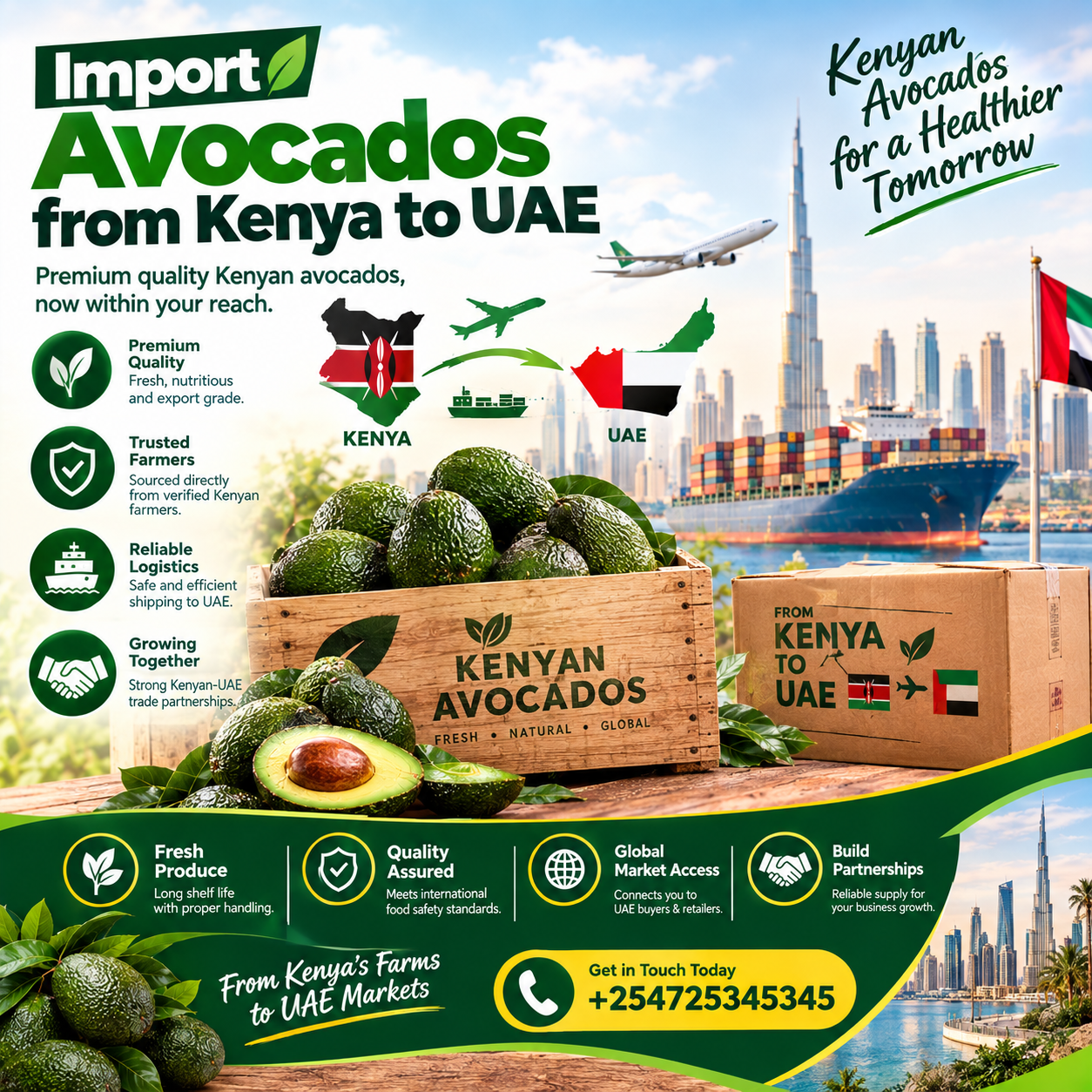
Import avocados from Kenya to UAE is the trade venture quietly creating a new generation of fresh-produce entrepreneurs across the Gulf. Kenya has risen into the world’s leading avocado-exporting nations, and the UAE sits beside it as one of the most lucrative, year-round fruit markets on the planet. Put those two together and you get a trade corridor with genuine margins, growing demand, and room for new entrants who prepare properly.
The opportunity is real, and so is the discipline it demands. Importing fresh produce across continents involves licenses, inspections, cold chains, and cash-flow decisions that punish the unprepared. Anyone setting out to import avocados from Kenya to UAE successfully needs a complete map — and this guide is that map.
We cover the trade from both ends. You will learn the fruit itself, the Kenyan export system, the UAE import requirements, and the process of finding and verifying suppliers. Then we go operational: documentation, sea and air freight, incoterms, costs, duties, cold-chain discipline, and how to actually sell the fruit once it lands.
By the end, you will be able to plan, launch, and grow a business built to import avocados from Kenya to UAE — at whatever scale your capital supports. Whether you start with one consolidated pallet or jump straight to a full reefer container, the principles never change. And the market rewards those who prepare, which is the recurring lesson behind every trader who has learned to import avocados from Kenya to UAE profitably.
One honest note before we begin. Regulatory requirements, freight rates, and duty treatment all shift over time, so treat every figure and rule here as well-informed guidance and confirm current specifics with the Kenyan Plant Health Inspectorate Service (KEPHIS) and the UAE’s Ministry of Climate Change and Environment before you ship. With that discipline in place, the path to import avocados from Kenya to UAE successfully is clearer in 2026 than it has ever been.
Why the Kenya–UAE Avocado Trade Is Booming
Kenya’s avocado story has been one of agriculture’s great rises. The country has climbed into the ranks of the world’s top exporters, with Hass — the variety global buyers want most — leading the charge from farms across Murang’a, Nyeri, Kiambu, and beyond. That supply-side surge is the foundation of every plan to import avocados from Kenya to UAE.
The UAE side of the equation is just as compelling. The country imports the overwhelming majority of its food, hosts a wealthy, health-conscious population, and serves as a re-export gateway to the wider Gulf. Demand for avocados there has grown steadily with café culture, fitness trends, and diverse expatriate eating habits — the demand engine behind everyone choosing to import avocados from Kenya to UAE.
The seasons fit together beautifully. Kenya’s main harvest runs roughly from March to October, with Hass supply stretching the window, which complements other origins serving the Gulf through the year. Buyers value suppliers who can hold quality across seasons — and that consistency is exactly what traders who import avocados from Kenya to UAE can build.
Know the Fruit: Varieties, Sizes, and Season
The Hass variety is the heart of this trade. Its thick skin, long shelf life, and rich flavor make it the global standard, and UAE buyers ask for it by name. Fuerte, Pinkerton, and Puebla appear in smaller volumes, but every serious plan to import avocados from Kenya to UAE is built around Hass first.
Export fruit travels in standardized cartons. The industry norm is the four-kilogram carton, with size counts — how many fruits fill a carton — determining the grade and the price. Learning the count system (typically ranging from small counts of larger fruit to high counts of smaller fruit) is basic literacy for anyone planning to import avocados from Kenya to UAE.
Seasonality shapes both availability and price. The main Kenyan season runs roughly March through October, with peak volumes and the sharpest prices in the middle months, while supply thins at the edges of the year. Traders who import avocados from Kenya to UAE plan their volumes against that curve rather than fighting it.
The Kenyan Side: Exporters, Licenses, and Compliance
The first structural fact is this: as a UAE importer, you will normally buy from licensed Kenyan exporters rather than exporting yourself. Kenya’s fresh-produce trade runs through exporters licensed and regulated by the Horticultural Crops Directorate and inspected by KEPHIS. Choosing that licensed channel is the compliant foundation of any plan to import avocados from Kenya to UAE.
Verification is your job, and Kenya makes it possible. KEPHIS maintains registries of licensed exporters and packhouses, and a legitimate supplier will share their license details, packhouse information, and traceability documentation without hesitation. That verification step is the single most important habit for anyone preparing to import avocados from Kenya to UAE.
Certification sits on top of licensing. Many international buyers expect GlobalGAP or equivalent certifications covering how the fruit was grown, sprayed, and handled. Aligning with exporters who hold those certificates protects your fruit, your buyers, and the long-term credibility of your decision to import avocados from Kenya to UAE.
Relationships are the real currency of this corridor. The traders who thrive build multi-season relationships with two or three exporters, agree volumes and specs before each season, and communicate constantly. That relational approach is what separates professionals who import avocados from Kenya to UAE year after year from one-time buyers.
The UAE Side: Licenses, Registration, and Import Rules
Importing into the UAE starts with your own house in order. You will need a valid trade license covering food trading, and registration as a food importer with the relevant UAE authorities — federally through the Ministry of Climate Change and Environment, and locally through bodies like Dubai Municipality at the ports. That regulatory foundation is the entry ticket for anyone planning to import avocados from Kenya to UAE.
Labeling and origin rules apply at the carton level. Fresh produce must clearly carry its country of origin, and packaged goods carry fuller labeling requirements in English and Arabic. Confirming those details with your exporter before packing avoids the delays that catch newcomers to the import avocados from Kenya to UAE trade.
Requirements evolve, so build verification into your routine. Rules on permits, registration, and inspection shift as systems modernize, and the cost of a missed update is measured in days of demurrage. The traders who import avocados from Kenya to UAE smoothly are the ones who reconfirm requirements before every season opens.
Finding and Verifying Suppliers
Start your supplier search where the legitimate exporters already are. KEPHIS registries, horticultural trade fairs, Kenyan export promotion events, and established B2B platforms are the honest channels into the trade. Skipping those channels is the first mistake many make when they set out to import avocados from Kenya to UAE.
Verification follows a simple checklist. Confirm the exporter’s license, ask for packhouse and traceability details, request references from current buyers, and insist on samples before any commitment. An exporter who resists those steps is telling you everything — and protecting yourself from that conversation is a core skill of anyone who import avocados from Kenya to UAE — better phrased: anyone preparing to import avocados from Kenya to UAE profitably.
Then start small, deliberately. A first order — even a consolidated half-container or an airfreight pallet — tests everything: the fruit, the packing, the documents, and the relationship. Scaling from a proven start is the path taken by nearly everyone who now import avocados from Kenya to UAE at container scale.
Quality Specifications: Put It in Writing
Quality is a contract, not a hope, and the specification is where it lives. Your agreement should state the variety, the size counts, maturity standards, and tolerance for defects — in writing, signed, before the season begins. That written specification is the protective spine of every deal to import avocados from Kenya to UAE.
Dry matter and maturity matter more than appearance. Avocados picked too early fail to ripen properly on arrival, and that failure shows up in your buyer’s complaint rather than at the packhouse. Specifying maturity standards is how professionals who import avocados from Kenya to UAE protect the eating experience that wins repeat orders.
The Documentation Checklist
Documentation is where fresh-produce trades are won or lost, and the list is learnable. Assemble this set for every consignment, and confirm current versions with both authorities before you ship:
- Phytosanitary certificate, issued by KEPHIS
- Certificate of origin
- Commercial invoice
- Packing list
- Bill of lading or airway bill
- GlobalGAP and traceability documents, where agreed
- Fumigation or health certificates, where required
- Import permits on the UAE side, as applicable
Each document has a purpose and an order. The phytosanitary certificate proves the fruit was inspected and is pest-free; the origin certificate unlocks tariff treatment; the invoice and packing list drive customs valuation. Understanding that chain is what separates organized traders who import avocados from Kenya to UAE cleanly from those whose containers wait.
A missing document is not a small thing. Demurrage, reefer running costs, and anxious buyers accumulate daily while paperwork corrects itself ashore. Building a document checklist into every consignment is the discipline that keeps the decision to import avocados from Kenya to UAE profitable across a full season.
Sea Freight: The Workhorse Route
Sea freight is the volume route for this trade. Refrigerated containers — reefers — sail from Mombasa to Jebel Ali, with transit typically in the two-to-three-week range depending on routing. That economics of scale is what allows anyone planning to import avocados from Kenya to UAE to compete on price at volume.
Avocados travel under precise conditions. Reefer settings for the fruit generally sit in the mid-single-digit Celsius range with controlled humidity, and your exporter packs the fruit to travel for weeks. Confirming those settings in writing is a standard habit among professionals who import avocados from Kenya to UAE by sea.
Full containers are the classic unit, but consolidation opens the door for beginners. Smaller traders can share reefer space through consolidators, testing the trade with a fraction of the capital a full container demands. That consolidated entry point is how most successful people who now import avocados from Kenya to UAE at scale began.
Air Freight: The Premium Route
Air freight compresses the journey from Kenya to the Gulf into hours. Flights from Nairobi’s J.K.I.A. reach Dubai daily, and fruit can move from a Kenyan packhouse to a UAE shelf within a couple of days. That speed is the strategic advantage of air for anyone who import avocados from Kenya to UAE into premium, ripeness-sensitive channels.
The economics decide when air makes sense. Charges per kilogram run far above sea freight, so air suits high-value volumes, urgent orders, and the early-season fruit that commands premium prices. Traders who import avocados from Kenya to UAE use both routes deliberately — sea for volume, air for freshness and opportunity.
Freight Forwarders: Your Operational Partners
A produce-experienced freight forwarder is worth their fees many times over. Perishables involve bookings that hold, reefer settings that travel correctly, and port handlers who move quickly — and forwarders who know the fruit manage all three. Choosing that expertise is one of the highest-leverage decisions in the whole plan to import avocados from Kenya to UAE.
Vet forwarders the way you vet suppliers. Ask for perishable references, confirm who clears at both ports, and get transit commitments in writing. That vetting habit is what keeps the logistics side of import avocados from Kenya to UAE predictable through busy seasons.
Incoterms, Contracts, and Payment
Incoterms decide who carries which risk, so learn them before you negotiate. FOB Mombasa puts you in charge of freight and insurance from the port onward, while CIF or CFR Jebel Ali delivers cost certainty through to the Gulf. Choosing deliberately between them is a defining decision for anyone about to import avocados from Kenya to UAE.
Payment structure is the negotiation inside the negotiation. Advance payments, letters of credit, and documents-against-payment each allocate risk differently between buyer and seller. Most traders who import avocados from Kenya to UAE long-term blend approaches — protecting cash while keeping suppliers motivated.
Put the whole relationship in writing. Varieties, counts, prices, delivery windows, ripeness standards, and remedy terms for failures all belong in a signed contract. That contract discipline is what keeps multi-season partnerships healthy on both ends of the import avocados from Kenya to UAE corridor.
Costs, Duties, and the Full Money Picture
Price transparency starts with the full cost stack. FOB fruit cost, packaging, inland transport to Mombasa, ocean or air freight, insurance, port and clearance charges, and UAE distribution all belong in your model before you commit. Building that complete picture is the financial foundation of anyone preparing to import avocados from Kenya to UAE.
Duty treatment favors this trade. Fresh fruits and vegetables are commonly admitted into the UAE at low or zero customs duty, though tariff schedules and rules change — so confirm the current treatment for avocados before pricing your landed cost. That verification habit is standard practice among professionals who import avocados from Kenya to UAE seriously.
Then add the buffer fresh produce demands. Wastage, rejections, and price movement are part of the trade, and realistic traders carry a buffer in every projection rather than pretending the trade is frictionless. That honest arithmetic is what keeps margins real for everyone who import avocados from Kenya to UAE through a full season.
Cold Chain: The Discipline That Protects Everything
The cold chain is the single most fragile link in the trade. From the packhouse, through the port, across the ocean, into clearance, and onto the delivery truck, avocados must hold their temperature range without breaks. That unbroken discipline is what the entire physical side of import avocados from Kenya to UAE exists to protect.
Ripeness management is the art within the science. Fruit can be shipped firm and ripened close to sale, and coordinating that timing with your buyers is a competitive skill. Traders who import avocados from Kenya to UAE into ripeness-managed channels earn loyalty that price alone cannot buy.
Selling in the UAE: Where the Fruit Goes
The UAE market offers layered channels. The wholesale markets — Dubai’s central fruit and vegetable market at Al Aweer chief among them — move the volume, while supermarket chains, hotels, restaurants, and cafés buy through distributors and directly. Mapping those channels before your first shipment is the commercial homework of everyone who import avocados from Kenya to UAE.
The re-export opportunity multiplies the market. The UAE is the Gulf’s trading hub, and fruit cleared there flows onward to neighboring markets through established trading networks. That gateway effect is the growth story for traders who import avocados from Kenya to UAE and build relationships across the region.
Risks and How to Manage Them
The trade carries real risks, and naming them is the first defense. Rejections at inspection, cold-chain breaks, price swings between contract and sale, and payment friction with unknown buyers are the classic four. Every experienced trader who import avocados from Kenya to UAE has a story about at least one of them.
Mitigation is structural, not hopeful. Verified suppliers, written specifications, proven forwarders, insurance where it makes sense, and staged scaling all reduce each risk to a manageable size. That structure is what separates professionals who import avocados from Kenya to UAE for years from enthusiastic one-shippers.
Common Mistakes to Avoid
Mistake one is the oversized first order. A full container as your very first shipment concentrates every beginner’s risk into a single decision, while a tested pilot order teaches you the trade at teachable cost. Staged scaling is the proven entry for everyone who now import avocados from Kenya to UAE at serious volume.
Mistake two is skipping verification. Unverified suppliers, verbal specifications, and unconfirmed regulations are how containers get rejected, delayed, or loaded with the wrong fruit. The disciplined trader who import avocados from Kenya to UAE successfully treats verification as the trade’s first commandment.
Mistake three is ignoring landed cost. Quoting from FOB prices alone hides the freight, clearance, distribution, and wastage that decide whether the deal actually earns. Complete-cost modeling is the arithmetic habit beneath everyone who import avocados from Kenya to UAE profitably across seasons.
Real Scenarios from Real Traders
Picture a Dubai-based trader testing the corridor with one consolidated reefer pallet. The pilot proved the supplier, the documents, and the buyer — and six months later the same trader was running full containers on agreed seasonal contracts. That staged journey is the classic first-year arc of people who import avocados from Kenya to UAE with patience.
Picture a Kenyan exporter and a UAE retailer meeting at a trade fair. One signed specification, one airfreight trial shipment, and one successful ripening test later, the fruit reached shelves with Kenya’s origin printed proudly on every carton. Relationships like that are how the best traders who import avocados from Kenya to UAE built their positions.
Picture a newcomer who skipped the forwarder search and lost a week to port delays. The reefer held, the fruit survived, but the margin went to demurrage — and the lesson went into every subsequent contract. Costly lessons like that are exactly what preparation prevents for those who import avocados from Kenya to UAE after learning from others.
The Road Ahead: 2027 and Beyond
The corridor is digitizing quickly. Traceability systems, digital documentation, and platform-based trade connections are streamlining the paperwork that once defined the trade. The traders who import avocados from Kenya to UAE with clean records today will move fastest as those systems mature.
And the corridor rewards those with wider interests managed well. Traders who also hold property, agribusiness, or rental interests across Kenya and the Gulf increasingly run their whole portfolio on the same disciplined, digital footing — through platforms such as rentaldesk.co.ke for the property side of that life. Pairing a disciplined import business with that broader visibility takes you from trading fruit to building a diversified enterprise — season by season, shipment by shipment.
Frequently Asked Questions
What documents do I need to import avocados from Kenya to UAE?
The core set includes a KEPHIS phytosanitary certificate, a certificate of origin, a commercial invoice, a packing list, and the bill of lading or airway bill, with GlobalGAP and traceability documents as agreed and import permits on the UAE side where applicable. Requirements evolve, so confirm the current checklist with KEPHIS and the UAE authorities before every season. That documentation discipline is the foundation of anyone who import avocados from Kenya to UAE cleanly.
Do I need GlobalGAP certification to import the fruit?
You personally may not need it, but the exporter and farms behind your fruit increasingly do — many buyers and certification schemes expect it across the supply chain. Prioritizing GlobalGAP-certified suppliers protects your fruit and your market access. That supply-chain standard is the quality backbone of everyone who import avocados from Kenya to UAE into serious retail channels.
When is the Kenyan avocado season?
The main season runs roughly from March to October, with peak volumes in the middle months, and Hass supply extending the window beyond the traditional season. Plan your volumes against that curve rather than promising year-round supply you cannot verify. Seasonal planning is the sourcing discipline behind everyone who import avocados from Kenya to UAE consistently.
Is sea or air freight better?
Sea freight in reefers wins on cost and volume, with transits typically in the two-to-three-week range, while air freight wins on speed for premium, urgent, or early-season volumes. The strongest traders use both routes deliberately rather than choosing one forever. That dual-route strategy is the logistics standard for those who import avocados from Kenya to UAE at scale.
How much duty will I pay in the UAE?
Fresh fruits and vegetables are commonly admitted at low or zero customs duty, though tariff schedules change, so confirm the current treatment for avocados before finalizing your landed-cost model. Budget the full cost stack — fruit, freight, clearance, distribution, and wastage buffer — rather than the FOB price alone. That complete-cost discipline is what keeps margins real for everyone who import avocados from Kenya to UAE profitably.
How do I find and verify a genuine Kenyan exporter?
Start with KEPHIS registries and horticultural trade channels, then verify license details, packhouse standards, certifications, and buyer references — and always request samples before committing. A legitimate exporter welcomes that checklist; an evasive one has answered your question. Verification of that depth is the first commandment for anyone setting out to import avocados from Kenya to UAE.
Where do I sell the fruit once it lands?
The UAE offers wholesale markets led by Al Aweer in Dubai, supermarket chains, hotels, restaurants, and distributors — plus re-export flows to neighboring Gulf markets. Map your channels before your first shipment and match volumes to the channel you can actually serve. That channel planning is the commercial core of everyone who import avocados from Kenya to UAE at growing scale.
How much capital do I need to start?
Consolidated or airfreight pilot shipments let you enter at a fraction of full-container cost, while container-scale trade demands capital for the fruit, freight, clearance, and a realistic buffer for wastage and price movement. Start at the size you can afford to learn from, then scale on proven results. That staged-capital approach is the standard path for everyone who import avocados from Kenya to UAE from a standing start.
What is the single biggest risk?
Cold-chain failure and documentation errors — the two causes behind most rejected, delayed, or spoiled consignments — outweigh price risk in this trade. Verified suppliers, experienced forwarders, complete paperwork, and written specifications reduce both to manageable size. That structural risk management is what separates professionals who import avocados from Kenya to UAE for years from one-time shippers.
Where should I start if I want to build wider business interests alongside trading?
Build the trade on verified suppliers and documented systems, and manage your broader Kenyan interests — property, rentals, and agribusiness holdings — on the same disciplined footing through platforms such as rentaldesk.co.ke. Pairing a verified supply chain with that wider visibility takes you from one consignment to a diversified Gulf–Kenya enterprise — shipment by shipment, season after season.