
How to Sell Kenyan Coffee to Europe: Finding the Right Importers
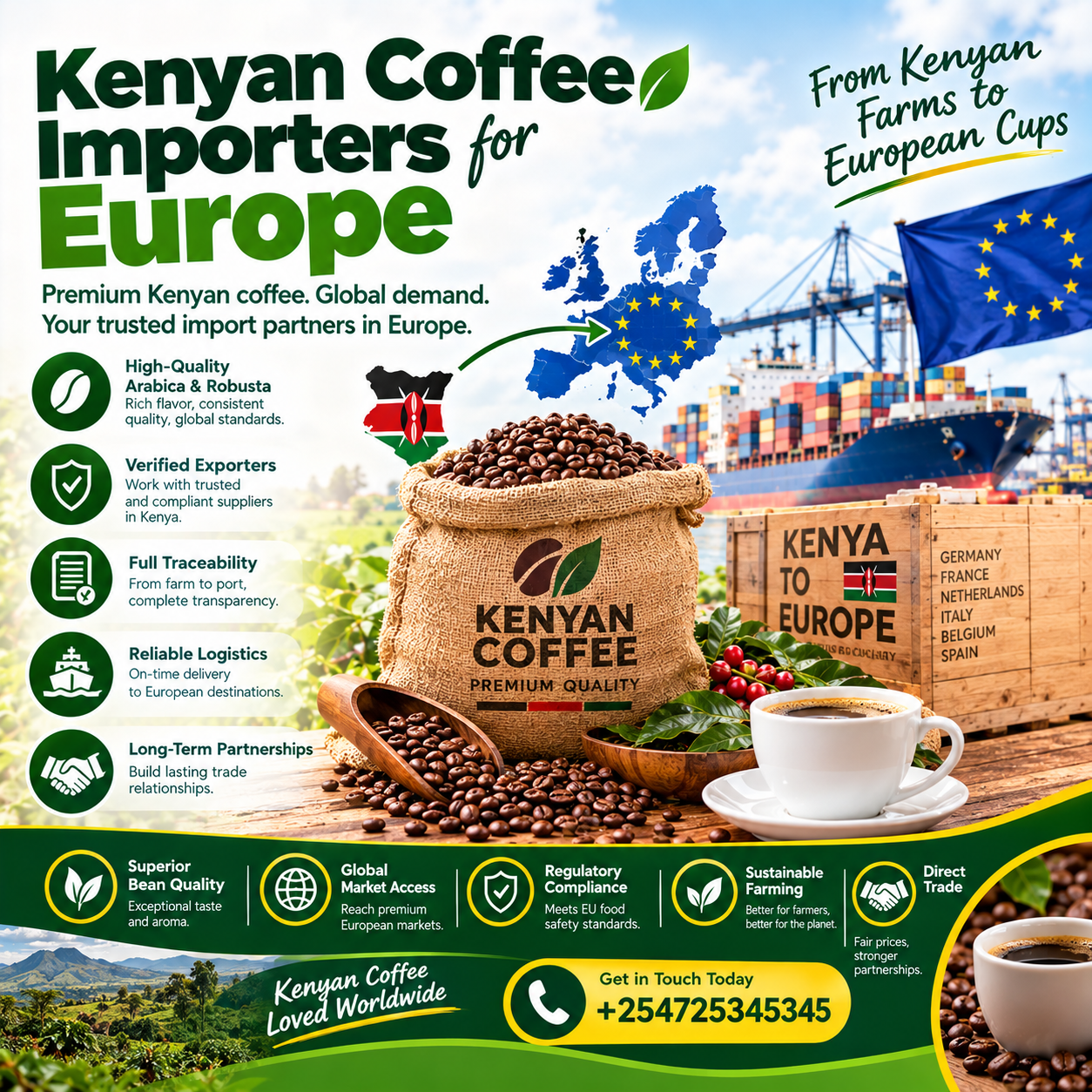
Kenyan coffee importers Europe — finding them, reaching them, and keeping them — is the question at the center of every Kenyan coffee business with international ambitions. Kenya grows some of the most celebrated coffee on earth, yet the farmers, estates, and exporters behind it capture only a slice of the value created when that coffee reaches European cups. The missing link for most sellers is not quality or ambition — it is structured access to the buyers who matter, and those buyers are the Kenyan coffee importers Europe hosts across Germany, Italy, the Nordics, and beyond.
The European market is the traditional home of Kenyan coffee. German and Scandinavian roasters built their reputations partly on Kenyan lots, and the specialty coffee movement has made single-origin Kenyan beans a premium staple across the continent. That history and that hunger are the opportunity — and this guide is the complete playbook for sellers who want their coffee inside it.
This guide is written from the Kenyan side of the table. We cover who the European importers actually are, what they demand before they buy, and where to find them. Then we go operational: preparing samples and certifications, approaching buyers professionally, navigating the Nairobi Coffee Exchange, negotiating contracts, moving coffee through logistics and compliance, and building the multi-season relationships that make the whole venture worthwhile.
By the end, you will have a complete, practical map for connecting with Kenyan coffee importers Europe hosts — at whatever scale your operation supports. Whether you run an estate in Nyeri, a cooperative in Kirinyaga, or an export business in Nairobi, the principles never change. Quality opens the door; professionalism keeps it open — and that pairing is what every successful seller to Kenyan coffee importers Europe eventually learns.
One honest note before we begin. Regulations, market structures, and pricing systems all shift — European deforestation rules, auction reforms, and green-coffee prices among them — so treat the specifics here as strong guidance and confirm current requirements with the Kenya Coffee Directorate, your marketing agent, and the relevant European authorities before you commit. With that verification habit, the path into the world of Kenyan coffee importers Europe is clearer in 2026 than it has ever been.
Why Europe Remains Kenyan Coffee’s Most Valuable Market
Europe is the largest coffee-consuming region on earth, and it has been Kenya’s traditional destination for decades. The relationship runs deep: European roasters built profiles around Kenyan acidity, and European importers built sourcing networks across the Kenyan highlands. That institutional familiarity is the foundation beneath every search for Kenyan coffee importers Europe.
The specialty boom multiplied the opportunity. Third-wave roasters across Germany, the Nordics, the Netherlands, and the UK pay premium prices for distinctive lots — and few origins deliver distinctiveness like Kenyan AA and AB. That premium tier is where the best margins live for sellers who reach the right Kenyan coffee importers Europe.
Volume lives alongside premium. Beyond the specialty tier, mainstream European roasters buy consistent Kenyan volumes year after year, giving sellers both a premium lane and a volume lane. Serving both — with the right lots in the right channels — is the commercial art of supplying Kenyan coffee importers Europe successfully.
Understanding the European Coffee Market
The market divides into recognizable tiers, and knowing them shapes your approach. The specialty tier buys single-origin, traceable, cupped lots and pays for the story as much as the bean. The commercial tier buys consistency and volume at tighter margins. Positioning your coffee in the right tier is the first strategic decision before approaching Kenyan coffee importers Europe.
Germany anchors the commercial volume of European coffee, while the Nordics, the Netherlands, and the UK lead the specialty segment. Italy, France, and Spain buy heavily through their own roasting traditions. Matching your coffee’s profile — bright, winey, full-bodied — to the right countries is the targeting discipline behind successful sales to Kenyan coffee importers Europe.
Demand patterns shift with the seasons. European roasters buy ahead of their roasting calendars, with quality samples circulating well before shipment seasons. Timing your approach to their buying rhythm is what separates suppliers who sell to Kenyan coffee importers Europe from those who hear “contact us next season.”
Who the Importers Actually Are: The Value Chain
The first structural insight is that “importer” describes several distinct roles. Green coffee importers buy at origin and sell to roasters, holding stock in Europe; some are trader houses with global reach, while others are specialty importers with curated origin relationships. Understanding which kind you are talking to is the first qualification step in the world of Kenyan coffee importers Europe.
Trader houses move large volumes across many origins. They buy through contracts and systems rather than relationships alone, and they suit sellers with scale and consistency. Specialty importers, by contrast, buy smaller lots with traceability and pay premiums for quality — the natural home of Kenya’s best coffees reaching discerning Kenyan coffee importers Europe.
Roasters sometimes import directly. The largest specialty roasters run their own sourcing teams and buy straight from exporters and cooperatives, skipping intermediaries entirely. That direct-trade channel is the premium path for sellers ready to engage Kenyan coffee importers Europe at the relationship level.
Agents and brokers complete the chain. Europe-based coffee agents connect buyers and sellers for commission, and they can be the fastest door into the market for newcomers. Working through a reputable agent is the low-risk entry into the world of Kenyan coffee importers Europe while you build your own relationships.
Preparing Before You Approach Anyone
Preparation is what separates suppliers European buyers respond to from suppliers they archive. Buyers receive dozens of samples and offers every season, and the unprepared ones are filtered out in seconds. Getting your house in order is the first act of selling to Kenyan coffee importers Europe.
Preparation element one is your coffee’s documentation. Grades, lot sizes, cupping scores, harvest dates, processing methods, and farm or factory details — assembled into a clean, honest offer sheet. Buyers scanning offers from Kenyan coffee importers Europe respond to completeness before they respond to charm.
Preparation element two is your certifications. Organic, Fairtrade, Rainforest Alliance, and similar schemes each open specific doors in specific markets, and European buyers increasingly ask for them by name. Holding the certifications your target buyers demand is the access ticket for serious sellers to Kenyan coffee importers Europe.
Preparation element three is your samples. Vacuum-sealed, freshly packed, clearly labeled sample sets — with grading and cupping notes — are the physical introduction your coffee makes before you do. Sample quality is the loudest signal in the whole journey toward Kenyan coffee importers Europe.
Quality and Grading: The Language Buyers Speak
Kenyan coffee’s grading system is your vocabulary, so learn to use it fluently. AA, AB, PB, and the other grades describe bean size and density — and European buyers ask in those terms from the first conversation. Fluency in the grading language is the baseline credibility for anyone selling to Kenyan coffee importers Europe.
Beyond grades, specialty buyers speak in scores. Coffee scoring above the specialty threshold — typically eighty points and above on the standard scale — enters the premium tier where prices follow quality. Cupping your own lots, or having them cupped honestly, is the self-knowledge that sellers to Kenyan coffee importers Europe need before they quote.
Consistency is the quality that actually retains buyers. A spectacular lot followed by a disappointing one loses the customer twice, while a good lot delivered identically season after season builds a franchise. That consistency discipline is what buyers value most in the suppliers they choose among Kenyan coffee importers Europe have vetted.
Where to Find European Importers
Channel one is the trade fairs, and they are the industry’s live marketplace. Specialty coffee expos, world coffee events in rotating European cities, and food and beverage fairs gather importers, roasters, and agents under one roof every year. Attending with samples and a clean offer sheet is the highest-energy way into the world of Kenyan coffee importers Europe.
Channel two is the directories and platforms. Green coffee importer directories, B2B sourcing platforms, and specialty coffee networks list buyers actively seeking origins — Kenya included. Working those lists systematically is the patient, scalable route into Kenyan coffee importers Europe.
Channel three is the institutional bridge. Kenya’s trade attaches and export promotion bodies, coffee industry associations, and your marketing agent’s existing networks all maintain buyer connections built over decades. Using those institutional doors is how most Kenyan sellers first meet serious Kenyan coffee importers Europe.
Channel four is the digital presence. A professional website with your lots, scores, certifications, and story makes you findable — because buyers also search for suppliers. Being discoverable online is the inbound half of the strategy for sellers targeting Kenyan coffee importers Europe.
The Nairobi Coffee Exchange and How Coffee Leaves Kenya
Understanding your own system matters as much as understanding theirs. Kenyan coffee historically moves through the Nairobi Coffee Exchange auction system, where licensed marketing agents sell lots on behalf of growers. Knowing how your coffee is marketed is the structural foundation of every plan to reach Kenyan coffee importers Europe.
Reforms have opened alternative routes. Direct settlement and negotiated channels now allow qualified sellers to bypass parts of the traditional flow, shortening the chain to the buyer. Exploring those routes with your marketing agent is how ambitious sellers shorten their path to Kenyan coffee importers Europe.
Your position in the chain determines your pricing power. Growers selling cherry or parchment capture less than those selling cleaned, graded, and exported coffee — and direct relationships with buyers change the equation again. Moving up that chain is the long-term value strategy behind every connection to Kenyan coffee importers Europe.
The Approach: How to Contact Buyers
The first message decides whether the second happens. A short, specific, professional email — who you are, what you have, the grades, scores, volumes, and availability of samples — outperforms every long introduction. That disciplined first contact is the opening move toward Kenyan coffee importers Europe.
Follow up with patience and rhythm. Buyers travel, cup, and travel again, and a polite second touch weeks later is professionalism rather than pressure. The sellers who eventually reach Kenyan coffee importers Europe are almost always the ones who followed up past the silence.
Cupping invitations are the strongest second move. Offering to send samples for cupping — or inviting buyers to cup at origin during their Kenya visits — converts correspondence into evaluation. That sample-to-cupping step is where relationships with Kenyan coffee importers Europe actually begin.
Contracts, Terms, and Payment
The contract is where trust becomes trade, and it deserves precision. Variety, grade, quantity, quality specifications, price basis, delivery window, packing, and payment terms all belong in writing before anything ships. That contract discipline is the protective spine of every deal with Kenyan coffee importers Europe.
Pricing follows recognized structures. Green coffee prices typically reference international benchmarks plus differentials for quality and origin, and specialty lots negotiate on their own scores and stories. Understanding that pricing logic is the negotiation literacy sellers need among Kenyan coffee importers Europe.
Payment terms balance risk on both sides. Advances, letters of credit, and documents-against-payment each allocate risk differently, and established relationships eventually earn friendlier terms. Getting the structure right at the start is what keeps cash flow healthy for sellers supplying Kenyan coffee importers Europe long-term.
Logistics: Getting Green Coffee to Europe
Green coffee travels its own way. Kenyan coffee ships in sixty-kilogram bags, lined for moisture protection, stuffed into containers, and sailed from Mombasa to European ports over several weeks. That shipping rhythm is the logistical backbone of every consignment reaching Kenyan coffee importers Europe.
Quality protection is the shipping discipline. Moisture, odors, and temperature swings damage green coffee in transit, so proper liners, dry containers, and reputable carriers matter. Protecting the cup through six weeks of ocean is what buyers implicitly demand from Kenyan coffee importers Europe have sourced from Kenya.
Timing completes the logistics. Aligning shipment with your contract’s delivery window — and with the buyer’s roasting calendar — keeps relationships smooth and warehouses stocked. That scheduling reliability is the operational reputation of suppliers to Kenyan coffee importers Europe.
Compliance: The Rules Your Coffee Must Pass
European compliance has tightened, and preparation is everything. Food safety standards, maximum residue limits for pesticides, and traceability requirements all apply to green coffee entering the EU. Building your farm records and spray logs around those requirements is the compliance foundation for sellers to Kenyan coffee importers Europe.
The EU deforestation regulation deserves special attention. Rules requiring proof that coffee was not grown on deforested land are reshaping sourcing across the industry, with implementation timelines that have shifted — so confirm the current status and requirements well before you trade. Buyers among Kenyan coffee importers Europe increasingly ask for that documentation before they ask for samples.
Documented farm records are your compliance asset. Plot maps, spray diaries, harvest records, and traceability files convert regulatory pressure into competitive advantage. Sellers whose documentation is ready move first when Kenyan coffee importers Europe audit their supply chains.
Building Relationships That Last
One shipment is a transaction; a decade of shipments is a business. The importers worth winning buy repeatedly, visit origin, and invest in suppliers who deliver consistently — and they reward those suppliers with stability. That long-game view is what separates sellers to Kenyan coffee importers Europe who build franchises from those who chase spot deals.
Communication keeps relationships alive between seasons. Harvest updates, cupping results, farm news, and honest reports on challenges make you a partner rather than a vendor. That year-round presence is the relationship discipline of successful suppliers to Kenyan coffee importers Europe.
Origin visits cement everything. When buyers walk your farm, meet your growers, and cup at source, the relationship moves from commercial to personal — and personal relationships survive bad seasons. Hosting those visits is the deepest investment a seller to Kenyan coffee importers Europe can make.
Pricing: Capturing More of the Value
Pricing power follows positioning. Coffee sold as anonymous commodity captures benchmark prices, while coffee sold as documented, traceable, cupped lots captures differentials. That positioning gap is the earnings story behind every direct connection to Kenyan coffee importers Europe.
Know the benchmarks before you negotiate. International green coffee prices move on global markets, and Kenyan lots trade against those benchmarks plus quality premiums. Following the market is the basic literacy for anyone pricing coffee for Kenyan coffee importers Europe.
Story adds value that benchmarks cannot. Certifications, farm identity, grower profiles, and sustainability narratives all justify premiums in the specialty tier. That story-backed pricing is the margin strategy for sellers to Kenyan coffee importers Europe in the premium lane.
Risks and How to Manage Them
Risk one is the unverified buyer. Payment defaults, speculations, and disappearing counterparties are the classic hazards of new export relationships — and verification is the defense. Confirming buyer legitimacy before shipping is the first commandment for anyone selling to Kenyan coffee importers Europe.
Risk two is the quality dispute. Coffees that arrive below specification create claims, discounts, and damaged reputations on both ends. Honest grading, accurate samples, and protective shipping are the defenses buyers among Kenyan coffee importers Europe expect from professional suppliers.
Risk three is regulatory surprise. Shifting residue limits, deforestation rules, and documentation requirements can strand unprepared shipments. Building compliance ahead of demand is the structural defense for everyone supplying Kenyan coffee importers Europe across future seasons.
Common Mistakes to Avoid
Mistake one is approaching unprepared. Offer sheets without scores, samples without labels, and volumes without clarity get archived before they are read. The sellers who reach Kenyan coffee importers Europe prepare before they pitch.
Mistake two is competing on price alone. Undercutting the market attracts buyers who leave for the next discount, while quality, story, and reliability build the relationships that last. Value-based selling is the sustainable path into Kenyan coffee importers Europe.
Mistake three is neglecting the home system. Unpaid advances, unclear marketing arrangements, and undocumented lots create disputes at origin that European buyers hear about quickly. Putting your own house in order is the prerequisite for credibility with Kenyan coffee importers Europe.
Real Scenarios from Real Sellers
Picture a Kirinyaga cooperative that sold its best lots anonymously at auction for years. After building a sample program, attending one specialty expo, and hosting a buyer’s origin visit, its top lots now sell directly to a Danish roaster at a premium every season. That transformation is the classic arc of growers who connect with Kenyan coffee importers Europe on their own terms.
Picture a Nyeri estate owner who spent two seasons on patient correspondence with a German importer. The first container contract, signed on documented cupping scores and traceability records, became a five-season relationship with visits in both directions. Relationships like that are the long-term reward of disciplined sellers to Kenyan coffee importers Europe.
Picture a young exporter who skipped buyer verification and shipped on a handshake. The coffee landed, the payment never did — and the lesson went into every subsequent contract’s verification checklist. That costly education is exactly what preparation prevents for sellers approaching Kenyan coffee importers Europe for the first time.
The Road Ahead: 2027 and Beyond
The corridor is digitizing quickly. Digital sampling, online cupping records, and platform-based trade connections are streamlining how origin meets buyer. The sellers who reach Kenyan coffee importers Europe with clean data today will move fastest as those systems mature.
And the corridor rewards those with wider interests managed well. Coffee sellers who also hold property, rental, or agribusiness assets increasingly run their whole portfolio on the same disciplined, digital footing — through platforms such as rentaldesk.co.ke for the property side of that life. Pairing a documented coffee business with that broader visibility takes you from selling lots to building a diversified enterprise — season by season, shipment by shipment.
Frequently Asked Questions
How do I find genuine Kenyan coffee importers in Europe?
Start with coffee trade fairs and specialty expos, green coffee importer directories, B2B sourcing platforms, and Kenya’s export promotion and trade-attaché networks — then verify every buyer before shipping anything. A professional importer welcomes verification; an evasive one has answered your question. That verification-first approach is the foundation for everyone targeting Kenyan coffee importers Europe.
What do European importers demand before buying?
Complete offer sheets with grades and cupping scores, quality samples, relevant certifications like organic or Fairtrade where the market demands them, traceability documentation, and consistent volumes across seasons. Preparation is what separates suppliers who get cupped from suppliers who get ignored. That preparation standard is the entry ticket for sellers to Kenyan coffee importers Europe.
Do I need certifications to sell coffee to Europe?
For the commercial tier, clean documentation and compliance may suffice, but the specialty and premium tiers increasingly require organic, Fairtrade, Rainforest Alliance, or equivalent schemes — plus the EU’s traceability and deforestation documentation. Match your certifications to the buyers you actually want. That certification strategy is the market-access plan for anyone selling to Kenyan coffee importers Europe.
How does coffee move from Kenya to European buyers?
Green coffee is cleaned and graded, packed in sixty-kilogram lined bags, stuffed into containers, and shipped from Mombasa to European ports over several weeks — with marketing agents and export documentation managing the Kenyan side. Protecting quality through that journey is the logistics discipline buyers expect. That shipping standard is what every supplier to Kenyan coffee importers Europe must master.
How is coffee priced for European buyers?
Prices reference international green coffee benchmarks plus differentials for grade, cup quality, certifications, and traceability — with specialty lots negotiating on their own scores and stories. Know the benchmark before you negotiate, and let documented quality justify your differential. That pricing literacy is the negotiation foundation for sellers to Kenyan coffee importers Europe.
What is the EU deforestation regulation, and how does it affect me?
It is European legislation requiring proof that coffee was not grown on deforested land, reshaping sourcing requirements across the industry — with timelines that have shifted, so confirm the current status with the relevant authorities. Sellers with plot maps, farm records, and traceability files are ready; sellers without them are exposed. That compliance readiness is increasingly the first question from Kenyan coffee importers Europe.
How do I price above the auction system?
Move up the value chain — selling cleaned, graded, documented lots directly to buyers captures more than anonymous cherry or parchment, and direct relationships with importers capture more again. Traceability, cupping scores, and grower identity all justify premiums the auction cannot price. That chain-climbing strategy is the earnings path for growers connecting with Kenyan coffee importers Europe.
What is the single biggest risk in this trade?
The unverified buyer — payment defaults and disappearing counterparties outweigh quality and price risks for new exporters. Verification, staged shipping, and proper payment structures reduce that risk to manageable size. That risk discipline is what separates professionals selling to Kenyan coffee importers Europe for years from one-season casualties.
How is this different from the avocado export guide on this site?
The avocado guide is written from the importer’s side — buying Kenyan fruit into the UAE — while this one is written from the exporter’s side, selling Kenyan coffee into Europe.
Read together, they cover both ends of the trade bridge, and the same verification, documentation, and relationship disciplines power both — including the wider Kenyan interests you can manage through rentaldesk.co.ke. Pairing that broad discipline with the specific craft of reaching Kenyan coffee importers Europe takes you from anonymous auction lots to named relationships — buyer by buyer, season after season.