
Export-Quality Produce Kenya: The Growing and Sourcing for World Markets
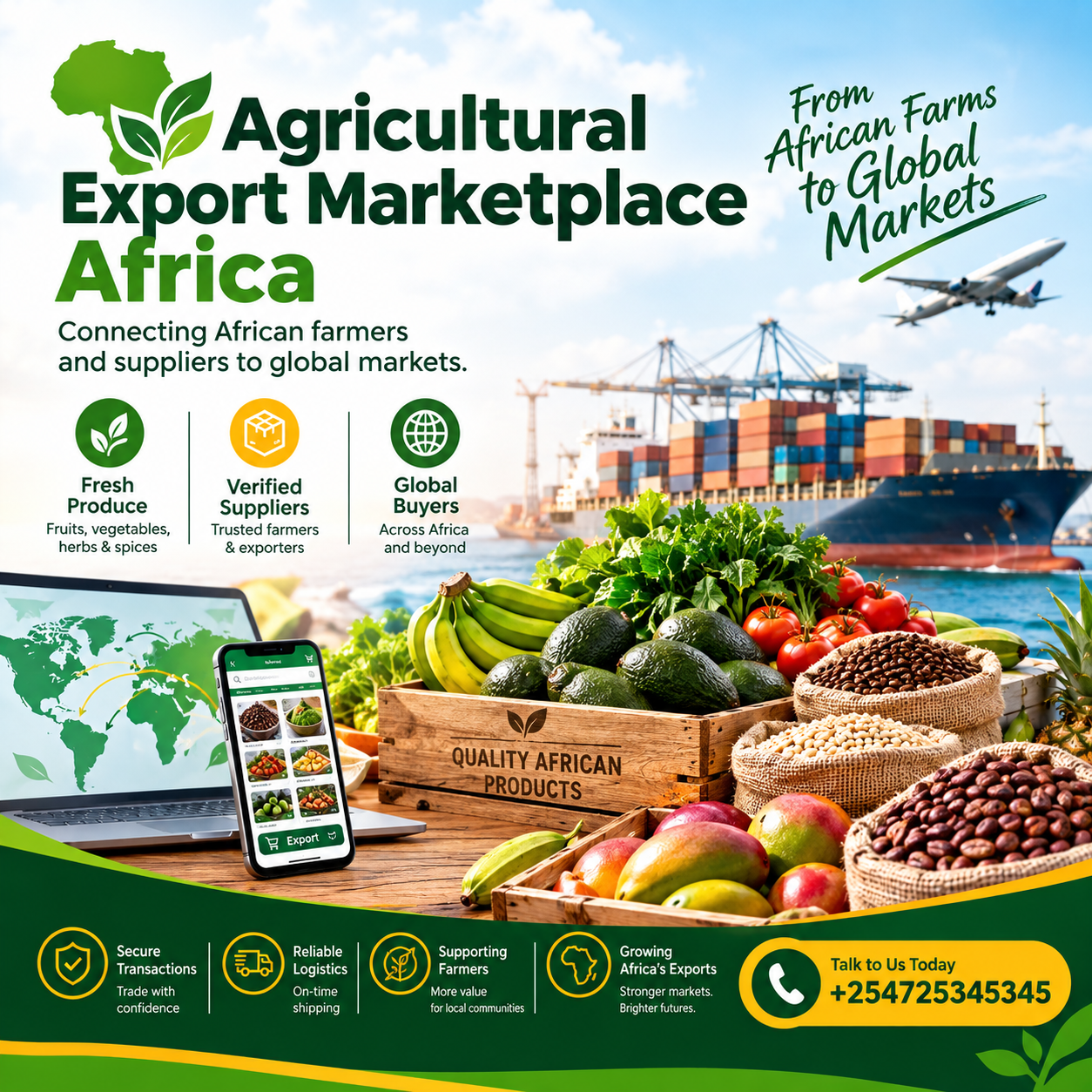
Export-quality produce Kenya is not a seed variety, a certificate framed on an office wall, or a lucky combination of soil and altitude — it is a discipline, practised daily from the moment a crop is planned until the moment a cooled pallet leaves the pack shed for the airport, and it is the reason a crate of beans grown on two acres in Murang’a can earn more in Rotterdam than the same crate grown carelessly on twenty.
The world does not pay Kenya for growing; the world pays Kenya for growing to specification, and the difference between those two things is the entire subject of this guide.
The paradox that every buyer and every ambitious farmer eventually confronts is this: Kenya grows some of the finest produce on the planet — highland avocados with oil content northern growers cannot match, fine beans that fill Europe’s winter tables, macadamia and mango and herbs and flowers that carry the flag into the most demanding supermarkets on earth — yet a large share of what the country grows never reaches export grade at all.
Not because the land cannot produce it, but because the handling, the documentation, the residue discipline, and the consistency were never built. The gap between a good harvest and a genuine export-quality produce Kenya consignment is exactly where fortunes are quietly made and quietly lost, season after season.
What has changed is that the world’s tolerance for imprecision has collapsed. European residue limits tighten year after year; retail audits now examine not just the fruit but the paperwork behind the fruit; buyers demand traceability down to the plot; and enforcement at the border has become unforgiving enough that one bad consignment can close a market lane for an entire season.
A grower who once could “aim for export” with good intentions now faces a technical specification — and only those who build the systems behind export-quality produce Kenya actually reach the shelves it was meant for.
The cost of getting it wrong is specific, and it is brutal. A container rejected at destination for a residue breach — the grower pays freight both ways, the buyer’s programme collapses, and the exporter’s name enters the very databases that make the next contract harder to win.
A consignment arriving one day late for the programme window, downgraded at arrival, discounted into loss. A season of contracted French beans rejected in week three because the spray interval was recorded on a calendar nobody checked. Every one of these failures was decided weeks before the produce left the farm — which is precisely why the discipline of export-quality produce Kenya has to be built at the field level, not patched at the border.
This guide examines export-quality produce Kenya in full: why the timing is no accident, why standards decide everything, what export quality actually is in measurable terms, the eleven requirements that define it, the benefits growers and buyers report, who the discipline matters to most, what each major crop demands, the single number that determines whether the export trade pays, and how a farm moves from local grade to export grade without disrupting the season that is already underway. By the end, the phrase stops being an aspiration and becomes a checklist.
Why the Timing Is No Accident
The timing of this shift is no accident. The entire trading environment around Kenyan horticulture has been formalising from both directions at once — from above, as importing governments tightened residue regimes, phytosanitary enforcement, and documentation requirements; and from within, as Kenya’s own regulators, exporters, and leading growers professionalised the chain that connects the field to the flight. The modern market for export-quality produce Kenya was created by that collision: world-class demand meeting, finally, a supply base organised enough to answer it consistently.
Kenya’s structural advantages explain why the stakes are so high. The country sits at the equator at altitude, which means it grows temperate crops in the northern winter and tropical crops the year round — exactly the counter-seasonal supply Europe’s supermarkets depend on through the dark months. Horticulture is one of the country’s largest foreign-exchange earners, built on vegetables, fruit, cut flowers, and herbs shipped daily through Nairobi and Mombasa. That position was earned by decades of export-quality produce Kenya building, and it is defended — or lost — every single week by the growers, packers, and exporters currently holding the standard.
The supply side has professionalised in parallel, and this is the part most farmers have not yet noticed. Packhouses with grading lines and pre-cooling now operate in the major production zones; cold stores anchor the airport corridors; certification has spread from large estates down into smallholder groups; and digital platforms now attach records, traceability, and specifications to produce that a decade ago moved on trust alone. The result is a market that has stratified: growers producing genuine export-quality produce Kenya hold contracts, premiums, and predictable volumes, while the remainder sells into the local market — often at prices that look fine until the cost of production is honestly counted.
Why Standards Decide Everything
Fresh produce export is a trust business conducted between strangers who never see each other’s fields. The importer in Amsterdam buys Kenyan beans he will never watch being picked, graded against a specification he cannot personally enforce, for shelves whose audits he must pass. The entire structure rests on one question — can this supplier be trusted to meet the spec without supervision? — and the only answer that travels across an ocean is a documented system. That is why export-quality produce Kenya is, at its core, not a product description but a promise with evidence attached.
The economics of rejection sharpen the point. In domestic trade, a poor batch is a disappointment; in export trade, a poor batch is a cascade — freight lost, programme slots lost, discounts taken, and a record created that follows the supplier into every future negotiation. Because the downside is so asymmetric, buyers pay structural premiums for growers whose export-quality produce Kenya record shows they do not generate surprises, and that premium, compounded across a season, routinely exceeds the entire cost of the systems that earn it.
Reputation compounds in both directions. The grower who meets specification for three consecutive seasons stops being checked the way newcomers are checked — orders come earlier, terms improve, and the buyer’s own team defends the relationship internally. The grower with a rejection history finds every subsequent quotation examined under a microscope. In export horticulture, history is not the past; it is the price. Nobody understands this better than the exporters who have spent years building brands around export-quality produce Kenya supply — and who drop a supplier in one season for the failures of one week.
There is also an inclusion dividend the industry talks about too quietly. Because the standards are written and objective, they can be taught, met, and audited anywhere — which means a well-organised smallholder group, given training and aggregation, can meet the same specification as a commercial estate. Export programmes built around smallholder export-quality produce Kenya supply have lifted rural incomes more durably than most development interventions ever manage, precisely because the market — not a donor — pays the bill every week.
What Export-Quality Produce Actually Is
At its core, export-quality produce Kenya is produce that satisfies four tests simultaneously: it meets the buyer’s written specification, it is safe under the destination’s food-safety law, it arrives in the condition the specification promised, and its history can be proven with documents. Remove any one of the four and the produce is not export quality — it is merely good-looking produce with a question mark attached, and question marks do not clear customs.
The first misunderstanding to destroy is that export quality means “the best-looking produce.” It does not. It means the most specified produce: count, size, maturity, colour, length, straightness, defect tolerance, brix where relevant — each written down, each measurable at arrival, each gradeable by a stranger with a ruler and a scale. A bean that is nine millimetres too long is not slightly export-quality; it is a different product. Growers who internalise this — that export-quality produce Kenya is a set of numbers, not an impression — make the transition that others never make.
The second misunderstanding is that quality is a farm attribute. It is a chain attribute. Perfect beans held three hours in the sun after picking are not export quality; perfect beans pre-cooled, graded, and flown on schedule are. The specification is satisfied by the whole journey — harvest timing, field heat removal, pack shed hygiene, cold storage, freight booking — which is why serious export-quality produce Kenya operations describe themselves less as farms than as supply chains that happen to begin on a farm.
The third misunderstanding is that quality ends at the border. It ends at the shelf — and increasingly it begins before the seed. The variety chosen must be the one the destination market wants; the planting must be scheduled backwards from the buyer’s programme calendar; the inputs used must be ones the destination’s law permits. By the time a consignment is called export-quality, a hundred decisions made weeks apart have already voted. That is what the phrase export-quality produce Kenya actually measures: not the fruit, but the coherence of everything behind the fruit.
Core Standards That Define Export Grade
Not every beautiful crate deserves the name. These are the requirements that genuinely define the standard — and every one of them can be verified, taught, and audited.
Grading Against a Written Specification
Everything begins with the spec sheet: size or count per unit, weight, colour stage, maturity index, defect tolerances, and the grading categories that decide what ships and what does not. A grower producing export-quality produce Kenya operates from the buyer’s written specification — not from memory, not from “what they took last time” — and trains every grading hand against it, because the grading shed is where the contract is honoured or broken, one bean at a time.
Phytosanitary Compliance and KEPHIS
Kenya’s plant health authority governs what may leave the country and under what certification, and destination countries govern what may enter under which conditions — pest-free areas, treatment protocols, inspection certificates. Consignments of export-quality produce Kenya move with their phytosanitary paperwork in order because the growers and exporters treat the inspection as part of production, not a hurdle at the end; the farms that fail are the ones that discover the requirements at the loading dock.
Pesticide Residue Limits
Maximum residue limits are where more Kenyan consignments die than anywhere else — not because the chemicals were used, but because the wrong ones were used, or the right ones were used too close to harvest, or nothing was recorded at all. Export-grade growers maintain an approved-inputs list drawn from the destination market’s law, observe pre-harvest intervals as contracts rather than suggestions, and test ahead of shipment. Residue discipline is the single habit that most separates export-quality produce Kenya supply from produce that merely looks the part.
GlobalG.A.P. and Certification
Certification is the passport that retail buyers require before the first order: GlobalG.A.P. for farm-level assurance, HACCP-based systems at the packhouse, and scheme-specific add-ons for particular markets. The certificate itself is not the achievement — the system behind it is; the certificate simply proves the system exists. Growers supplying export-quality produce Kenya programmes through certified groups gain something larger than the document: the audit rhythm forces the record-keeping, hygiene, and input control that make every other standard easier to hold.
Traceability from Plot to Pallet
When a buyer, an auditor, or a border inspector asks where a specific pallet came from, the answer must arrive in minutes and match everything else on file: which plots, which harvest dates, which inputs, which grading shift. Traceability is what converts a rejection from a catastrophe into a recall of known scope — and it is now the entry ticket, not the differentiator, for export-quality produce Kenya supply into any serious programme.
The Cold Chain
Every hour without temperature control is shelf life donated to the road. Export-grade practice removes field heat within hours of harvest through pre-cooling, holds the chain through grading and storage, and hands over produce whose temperature history can be shown. Buyers consistently report that cold-chain competence is the most visible divide between export-quality produce Kenya suppliers who last and suppliers who begin brightly and decay by week six — because the chain, once broken, cannot be repaired at the airport.
Harvest Maturity and Timing
Maturity is a specification with a clock attached: harvested too early, produce fails to ripen into what the buyer sold to their customer; too late, it arrives over the hill. Export-grade operations harvest to the maturity index — dry matter in avocado, firmness in mango, length and snap in beans — and schedule the pick against the freight window rather than against labour availability. The discipline of timing is unglamorous, and it is why export-quality produce Kenya arrivals perform on the shelf weeks later.
Packaging
Packaging is not a container; it is a ventilation system, a protection system, and a communication system carrying variety, count, origin, and traceability codes. Under-specify it and the produce arrives bruised or cooked; mislabel it and the consignment stops at customs. Exporters of export-quality produce Kenya treat packaging specifications as engineering documents — because that is exactly what they are.
Variety Selection
The destination market chooses the variety, not the farm: the bean length the buyer’s line requires, the avocado variety with the season window and oil profile the programme demands, the herb cultivar the retail shelf expects. Growers who plant first and ask questions later discover their beautiful crop has no buyer; growers who plant backwards from a confirmed programme produce export-quality produce Kenya supply that was sold before it was sown — which is the entire financial logic of the export trade.
Records and Spray Intervals
Every spray, every fertiliser application, every harvest date, every input purchase — recorded at the time, per plot, per crop. Records are what allow the pre-harvest interval to be enforced, the residue test to be anticipated, the audit to be passed, and the traceability query to be answered. It is no accident that the strongest export-quality produce Kenya suppliers are almost always the best record-keepers: the documents and the discipline are the same habit seen from two angles.
Consistency Across the Programme
Anyone can deliver one beautiful consignment; the contract is proven in week eleven. Programmes are built backwards from the buyer’s calendar — staggered plantings, multiple plots, buffer plans for the weeks the weather turns — so that volume and grade hold from first delivery to last. Consistency is the summit of the discipline, and it is the reason buyers will pay premiums year after year for export-quality produce Kenya suppliers who simply never surprise them.
The Benefits Growers and Buyers Report
The first benefit is price — the visible one. Export programmes pay structured premiums over local spot prices, and growers who meet specification consistently report earnings per acre that local-market selling never approached. But the deeper economics are the losses that never happen: no rejected loads, no panic sales at the gate, no harvests that matured into a market nobody had arranged. Growers supplying export-quality produce Kenya programmes describe the certainty as worth as much as the premium — a known buyer, a known price, a known week.
The second is planning power. A contracted programme tells the grower what to plant, how much, and for when — which converts farming from speculation into scheduling. Inputs are bought once, correctly; labour is planned for the harvest weeks; cash flow stops lurching. Farms producing export-quality produce Kenya under contract plan their entire year from the programme calendar, and the calm that follows is repeatedly described by growers as the change they would least give up.
The third is access to inputs and finance that spot growers cannot reach. Input suppliers extend better terms to contracted growers; lenders finance export programmes against documented off-take; certification bodies and programmes co-invest in group training. The reason is simple: a farm with a confirmed buyer and a traceable system is a different credit risk — and the financing quietly upgrades every input decision behind export-quality produce Kenya production, from seed to spray to cold store.
The fourth is technical growth. Working to export specification forces the agronomy upward: better varieties, correct spacing, disciplined scouting, real records. Growers report that after two seasons of export discipline, their whole farm improves — including the plots that never leave the country — because the systems built for export-quality produce Kenya supply do not know which crop they are serving.
On the buyer’s side, the first benefit is programme survival. Retail shelves and processing lines cannot tolerate supply gaps, and buyers whose sourcing rests on verified, specification-compliant suppliers stop losing weeks to failures. The second is audit readiness: certifications, traceability, and residue records arrive with the produce rather than being chased during the audit. Buyers who anchor their programmes in export-quality produce Kenya suppliers describe the shift as moving from firefighting to planning — and their shrinkage and claim rates show it within a season.
The joint benefit is the compounding partnership. Every shared season adds specification fluency, forecast accuracy, and problem-solving speed that no newly matched pair can buy. The strongest trading relationships in Kenyan horticulture — the ones that survive market shocks, currency swings, and bad weather years — are built on years of export-quality produce Kenya history that functions as shared infrastructure neither side would dismantlight lightly.
Who Needs It Most
Smallholder groups and co-operatives have the most to gain, because export specification is the bridge from subsistence-adjacent pricing to formal-market economics. A well-trained group meeting a written spec, aggregating through a pack shed, and supplying certified programmes captures premiums that transform member incomes — and the group structure solves the volume problem no individual smallholder can solve alone. Programmes built on smallholder export-quality produce Kenya supply are, season after season, the quietest success story in the sector.
Commercial farms and estates need the discipline as their licence to operate. At scale, a single rejection is a board-level event, and the systems — certification, cold chain, records, residue testing — are not optional infrastructure but the operating system itself. Estates that maintain export-quality produce Kenya standards across dozens of blocks and hundreds of workers do it through exactly the documented routines this guide describes, executed without exception and audited without mercy.
Exporters and packing companies sit at the fulcrum, because they carry the specification to both sides: translating the buyer’s requirements into field-level practice, and the field’s reality into the buyer’s documents. The exporter’s entire reputation is manufactured from the export-quality produce Kenya performance of the growers behind them — which is why the best exporters invest in grower training, input programmes, and traceability systems as aggressively as any farmer does.
Development programmes and county governments need the standard as their impact mechanism. Money spent helping farmers grow more of what nobody specified is money spent twice; money spent building group certification, pack shed capacity, and market-linked export-quality produce Kenya supply produces income changes that survive the programme’s end — because the market keeps paying after the donor leaves.
Aggregators and input suppliers form the supporting economy, and their fortunes rise with the standard. Aggregation platforms that connect certified growers to buyers, and suppliers who stock the approved inputs the specifications require, exist in a growth loop with the growers they serve: better specification compliance drives more programme contracts, which drives demand for the systems behind export-quality produce Kenya production — and every participant’s business compounds with the discipline.
Finally, buyers — retailers, importers, processors, food-service groups — sourcing from Kenya need to understand the standard from the inside, because their programmes are only as strong as the weakest farm in the chain. Buyers who invest in supplier development rather than merely supplier selection consistently hold the most reliable programmes in export-quality produce Kenya sourcing, and their category managers spend their seasons expanding volumes instead of replacing suppliers.
Crop by Crop: What Each Category Demands
Avocado is Kenya’s export flagship and its most instructive discipline: maturity must be proven by dry-matter testing, the harvest window and handling rules protect the fruit’s short shelf life, and residue and pest protocols govern entry into each destination. Growers who master avocado discover they have mastered the general standard — which is why the crop is the best possible training ground for export-quality produce Kenya production of any kind.
French beans and peas are the precision category: length, straightness, stringlessness, and residue limits enforced on air-freight timelines that forgive nothing. The crops are planted backwards from programme calendars, harvested to the millimetre, and pre-cooled within hours; export-quality produce Kenya competence in legumes is widely regarded as the sector’s strictest finishing school.
Macadamia is the patience category — years from planting to income — which makes variety selection and kernel-quality discipline decisive long before the first delivery. Buyers pay on kernel recovery and grade, and the growers who document orchard practices from the beginning are the ones whose export-quality produce Kenya nuts command the top of the range when the trees finally bear.
Mango is the treatment-and-variety category: pest control records, orchard hygiene against fruit flies, and the varietal calendar the destination market actually wants. One missed protocol can close a market lane for a season, so mango growers supplying export-quality produce Kenya programmes run some of the most meticulous orchard records in the industry.
Herbs and leafy vegetables are the speed category — the shortest shelf lives, the tightest temperature windows, the least forgiving logistics. Nobody reaches professional grade in herbs by accident; the growers who supply export-quality produce Kenya herb programmes demonstrate cold-chain and scheduling mastery that transfers to everything else they grow.
Cut flowers, though horticulture’s crown, obey the same laws in a different costume: stem length, bud stage, vase-life protection, and cold chain measured in minutes rather than hours. The flower sector’s decades of discipline — grading lines, certified farms, traceability — are precisely the template the food crops are following, and proof of what export-quality produce Kenya standards achieve when an entire industry commits to them together.
The Rejection Rate: The Number That Changes Everything
The single most clarifying number in the export trade is the rejection rate — the share of consignments, or the share of weight within consignments, that fails at destination. It is the number buyers price, insurers price, and seasoned exporters watch more closely than the daily market, because it converts every upstream shortcut into its downstream price. Growers and exporters who measure their rejection rate honestly — per cause, per plot, per week — hold the steering wheel of their export-quality produce Kenya business; those who do not are driving by sound.
The second discipline is costing the rejection properly. A failed consignment is never just the produce: it is freight both ways, programme penalties, replacement sourcing at panic prices, and a record in the buyer’s file that discounts every future quotation. Growers who model the full cost of one rejection against the annual cost of pre-cooling, testing, and record systems discover that export-quality produce Kenya infrastructure is not an expense at all — it is the cheapest insurance available, priced against the most expensive event in the trade.
The third is driving the number down at the cause. Residue failures trace to inputs and intervals; quality failures trace to grading and cold chain; documentation failures trace to records. Every cause has a system that prevents it, and every system is auditable before the failure — which is why the exporters with the lowest rejection rates are rarely the ones with the most experience, but always the ones with the tightest export-quality produce Kenya routines executed week after week without exception.
Export Grade vs Local Market: The Honest Comparison
The local market is not the enemy — it is the fallback, the cash-flow bridge, and the destination for the share of every harvest that does not meet spec. But the comparison deserves honesty: local selling prices what the market feels on the day, absorbs no documentation, and pays nothing for the systems behind the produce. Export selling prices what was promised weeks ago, demands the systems, and pays for them permanently. Growers who split their production — contract programme first, local market for the outgrades — capture both, and discover that export-quality produce Kenya discipline quietly raises the value of even the produce that stays home.
The deeper difference is directional. Local selling rewards whoever shows up on the day; export supplying rewards whoever built the system over years — and that compounding is why the gap between the two widens every season. Two farmers start with the same acreage; within five years, one is selling graded export-quality produce Kenya under contract with financing behind the programme, and the other is negotiating with the same broker at the same gate. The divergence began the season one of them decided the specification was the product.
Records, Traceability and Finance
Documentation has become the hinge of the entire trade. Certification audits, residue regimes, retail programmes, and border inspections all assume records exist — harvest dates, input applications, spray intervals, lot movements — and the grower who produces them from a system rather than a scramble holds a qualification that no verbal assurance can replace. Farms supplying export-quality produce Kenya programmes treat record-keeping as part of the crop itself: planted, tended, and harvested alongside the beans.
Finance follows the same logic. Lenders, lease providers, and input credit schemes price their risk on visibility — and a farm with a contracted programme, certified systems, and traceable history is underwriteable in a way a spot-selling farm never is. The credit that flows toward documented export-quality produce Kenya operations then funds the very cold stores, certification, and inputs that deepen the discipline, closing a loop that spot growers stand outside of entirely.
How to Move a Farm to Export Grade: Step by Step
Begin with the buyer, not the crop: identify the specification, the programme calendar, the certification the destination requires, and the volumes the programme can absorb — and let those answers choose the variety and the planting dates. Growers who reverse-engineer export-quality produce Kenya production from a confirmed programme never face the saddest scene in horticulture: a beautiful harvest with no home.
Then build the systems in order: the approved-inputs list drawn from the destination’s law, the record-keeping per plot, the grading against the written spec, the harvest-to-cool-chain timing, and the traceability that ties lots to plots. Certification is best pursued through a group where possible — shared cost, shared training, shared audit — and the systems built for export-quality produce Kenya compliance will, within two seasons, be running as ordinary farm routine rather than export ceremony.
Finally, start small and prove the chain: one plot, one programme, one season, measured honestly at arrival. The first season’s data — grade-outs, interval compliance, rejection causes — becomes the improvement plan for the second, and the second becomes the platform for scale. Farms that graduate this way rarely look back, because the export-quality produce Kenya premium is not a one-season windfall; it is a compounding asset that begins paying the week the first compliant consignment clears.
Implementing Without Disrupting the Season
Run the transition on a boundary — a new planting, a new block, a new season — and layer the export systems onto that fresh cycle rather than retrofitting a crop already in the ground. Train the harvest and grading team on the written spec before the first pick, walk the first consignment’s paperwork before the first dispatch, and review every delivery against arrival reports for the first full cycle. The first season sets the farm’s export culture for years, and a export-quality produce Kenya routine whose first consignment arrives clean builds a confidence — in the team, the buyer, and the bank — that no amount of later correction can purchase.
The Future of Export-Quality Produce
The technology is still accelerating. Digital platforms are attaching traceability and grading records to every lot as a by-product of daily operations; residue and maturity testing are moving closer to the farm; and buyers increasingly weight verified performance data automatically when allocating programme volume. The growers digitising their export-quality produce Kenya systems now are building the histories the next decade of programme allocation will read first — and that history, like every asset worth having in this trade, cannot be bought retroactively at any price.
Frequently Asked Questions
What does “export quality” actually require from a Kenyan farmer day to day? Three habits: grading every harvest against the buyer’s written specification, keeping records of every input with its pre-harvest interval, and moving produce from harvest into cooling fast enough to protect shelf life. None of them is complicated; all of them are non-negotiable — and together they are what separates export-quality produce Kenya supply from produce that merely hopes.
Can a smallholder realistically meet export standards? Yes — and thousands already do, through groups. The group solves volume, shares certification costs, and provides the pack shed and training no single smallholder would build alone; the individual member’s job is discipline at the plot. Buyers actively seeking dependable export-quality produce Kenya supply from organised smallholders report that the group’s systems matter far more than the size of any member’s farm.
How long does it take to become export-ready? Realistically, one to two seasons: the first to build systems and certification through a group, the second to prove consistency across a full programme. Growers who start with a confirmed buyer and a written specification compress the timeline considerably, because everything about export-quality produce Kenya readiness is faster when the target is already written down.
What causes most export rejections, and how are they prevented? Residue breaches from wrong inputs or missed pre-harvest intervals, quality failures from weak grading or broken cold chains, and documentation gaps at inspection. Each cause has a matching system — approved-input lists, records, grading discipline, pre-cooling, traceability — and the exporters with the cleanest export-quality produce Kenya histories are simply the ones who run those systems every week, not only before audits.
How does a farmer find export buyers in the first place? Through exporters and aggregators who supply programmes and are always seeking compliant growers, through certified group membership that makes a farm visible to programme buyers, and through platforms that connect verified supply to documented demand. The reliable path is capability first — spec, records, certification — because buyers of export-quality produce Kenya search for proven systems, and the systems, once built, attract the buyers rather than the reverse.