
How to Sell Coffee Internationally: The Complete Guide to Taking Your Coffee to Global Buyers
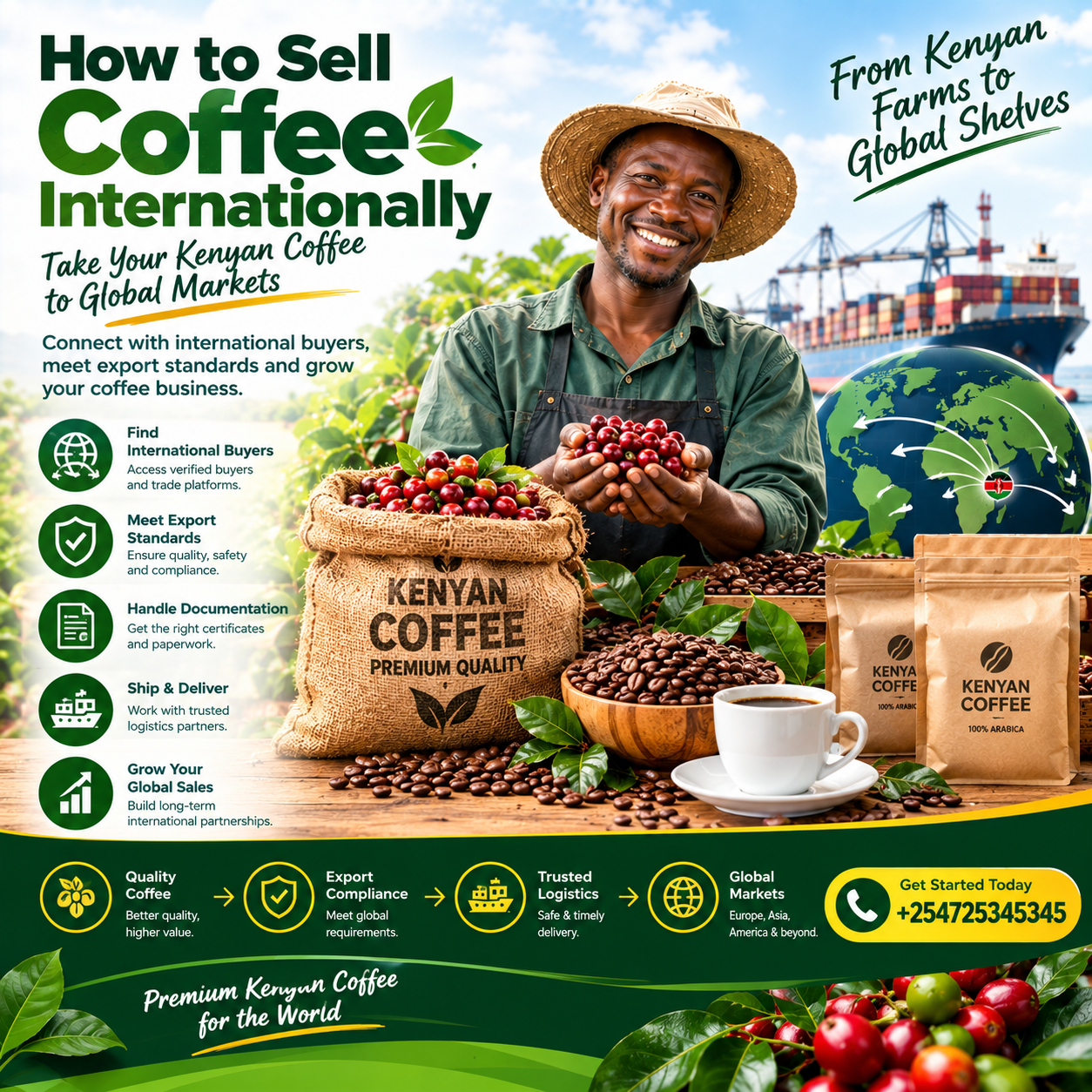
How to sell coffee internationally is the question every ambitious coffee grower, cooperative, and trader eventually asks — because growing exceptional coffee and selling it to the world are two entirely different skills, and the second one is where the money actually lives. Coffee is the second most traded commodity on earth by value, consumed daily by billions of people across every continent, and the gap between what a farmer receives at origin and what a roaster pays in Berlin, Tokyo, or New York can be enormous. Closing that gap — legally, professionally, and profitably — is what international coffee selling is all about.
The good news is that the path is well-marked: a century of global coffee trade has produced clear quality standards, established certification systems, known buyer channels, defined contracts, and proven logistics routes, and today’s digital platforms have made the whole journey dramatically faster to start. Anyone willing to learn how to sell coffee internationally properly can now reach buyers that once required agents, offices abroad, and years of personal networking.
This guide is the complete roadmap. It explains how the international coffee market is structured, what buyers actually look for, how grades and cupping scores determine your price, which certifications open which doors, how export licensing and documentation work, how the global price is set and how you price above it, where to find buyers and how the sample-to-contract process really unfolds, how payments and shipping work, and the mistakes that sink most first-time sellers.
Whether you are a smallholder farmer with a few hundred trees, a cooperative aggregating members’ harvests, or an entrepreneur building a green coffee trading company, everything you need to master how to sell coffee internationally is laid out step by step below.
Understanding the Global Coffee Market Before You Sell
The first lesson in how to sell coffee internationally is understanding who buys, what they buy, and why — because the international coffee market is really two markets wearing the same name.
The commercial market trades enormous volumes of standard-grade coffee — the beans behind instant coffee, blends, and mass-market supermarket brands. Prices here track the commodity exchanges closely, competition is fierce, and margins are thin. This market buys on price and reliability, not origin stories.
The specialty market trades coffee scored 80 points or above on the 100-point Specialty Coffee Association scale — single-origin lots, micro-lots, and relationship coffees that roasters buy for their distinctive character. Prices here range from modest premiums to multiples of the commodity price, and buyers care intensely about variety, altitude, processing method, farm identity, and the story behind the bag. This is where the dramatic money lives, and it is where most sellers learning how to sell coffee internationally should aim, because the specialty segment has grown relentlessly for two decades and actively seeks new origins.
Between the two sits the commercial-premium segment — quality coffee sold to importers and roasters who pay above commodity price for dependable, clean, well-prepared lots without needing 88-point cupping scores. For a first-time seller, this segment is often the smartest entry point: buyers are numerous, standards are achievable, and the volume you can move is meaningful. Understanding where your coffee fits across these three segments is the foundational decision in how to sell coffee internationally — it determines your buyers, your certifications, your pricing, and your entire marketing approach.
Know Exactly What You Are Selling: Grades, Scores, and Specifications
No buyer on earth purchases “coffee” — they purchase precisely defined coffee, and anyone serious about how to sell coffee internationally must learn to describe their product in the language buyers speak.
Screen size and grade. Green coffee is graded partly by bean size (screen size), density, and defect count. Kenya’s famous grading system (AA, AB, PB) describes screen size; Ethiopia’s grades describe processing and quality levels; Colombia and Central America run their own systems. Learn your origin’s grading system completely and know exactly which grade your lots earn — every professional conversation about how to sell coffee internationally begins with this declaration.
Cupping scores. The SCA cupping protocol — a standardized tasting method scored to one decimal point — is the international language of coffee quality. Scores below 80 are commercial grade; 80–84.99 is specialty; 85+ is premium specialty; 90+ is exceptional and auction-worthy. Getting your lots professionally cupped — by a certified Q grader, a national cupping laboratory, or quality programs run at origin — converts your coffee from an opinion into a credential, and a cupping score attached to your offering is the single most powerful selling tool in how to sell coffee internationally at the specialty level.
The full specification sheet. Professional sellers describe each lot completely: variety (SL28, SL34, Bourbon, Typica, Geisha, Heirloom, and so on), altitude, region and farm, processing method (washed, natural, honey), drying time, moisture content (ideally 10–12%), screen size, defect count, density, harvest year, and cupping notes describing flavor character. This specification sheet is your product — buyers order against it, and its accuracy determines your reputation. Sellers who master how to sell coffee internationally treat their specification sheets with the seriousness a pharmaceutical company treats a drug label.
Quality First: Preparing Coffee That Commands International Prices
Everything about how to sell coffee internationally succeeds or fails at the drying table, months before any buyer ever appears. International buyers reject coffee for defects that are entirely preventable at origin.
Harvest only ripe cherry. Selective picking — harvesting only fully red cherries, often in multiple passes — is the foundation of specialty quality. Strip-picked coffee containing unripe and overripe cherry can never cup well, whatever happens afterward. Buyers who sample underripe-heavy coffee do not negotiate; they simply move on.
Process cleanly and consistently. Whether washed, natural, or honey, the processing method must be executed with discipline: proper fermentation times, clean water, immediate depulping, and sanitary equipment. The washed process — dominant in East Africa and much of Latin America — demands careful fermentation and washing to remove mucilage completely. Processing errors show up directly in the cup and directly in your price.
Dry to the correct moisture. Slow, even drying on raised beds — turned regularly, shaded during the hottest hours, protected at night — to a moisture content of 10–12% is the standard international buyers expect. Rushed drying creates defects; over-drying loses flavor. A simple, accurate moisture meter is among the best investments any seller studying how to sell coffee internationally can make.
Rest, store, and protect. Dried green coffee should rest in parchment (where applicable) before milling, then be stored in cool, dry, odor-free conditions — green coffee absorbs surrounding smells and moisture with alarming efficiency. GrainPro liners inside standard jute or sisal bags protect against moisture and odor contamination during storage and shipping. Storage failures after perfect processing are among the most painful and most common losses in how to sell coffee internationally at origin.
Mill to order. Hulling (removing parchment) should happen close to shipping time, and milling must include careful grading and defect sorting — by machine and ideally by hand. Clean, uniform, defect-sorted green coffee photographs beautifully, cups beautifully, and prices beautifully.
Certifications That Open International Doors
Certification is optional for entering how to sell coffee internationally at the basic level and transformative for reaching the premium levels — and each scheme serves a different buyer segment.
Organic certification (EU, USDA, or JAS standards) unlocks the fastest-growing premium segment, with the crucial caveat that land conversion takes up to three years and documentation discipline is continuous. Organic premiums are substantial and durable — worth planning years ahead if the segment fits your production.
Fairtrade certification connects you to buyers committed to minimum prices and social premiums, particularly relevant for cooperatives with strong governance and community investment stories.
Rainforest Alliance certification signals environmental and social responsibility to mainstream buyers and appears in more purchase requirements every year.
C.A.F.E. Practices (Starbucks’ verification program) matters if your ambition includes supplying large chains and their supply networks.
Cafe Imports-style quality verification and participation in national quality programs, auction systems, and the Cup of Excellence add competitive credentials at the top end.
The professional approach to how to sell coffee internationally is to sequence certifications against your target buyers: ask what your intended customers require, certify for those schemes first, and let each new certificate expand your addressable market. Certification is not overhead — it is market access, and in premium segments it is the difference between being visible and being invisible.
Export Licensing and Documentation: The Legal Machinery
The regulatory side of how to sell coffee internationally intimidates newcomers most, yet it is entirely learnable — and it repeats identically with every shipment, so you learn it once and benefit for years. Requirements vary by country, so confirm details with your national coffee board or agriculture authority, but the architecture is broadly consistent across coffee-producing nations.
Business registration and tax compliance come first: a registered legal entity, tax registration, and banking infrastructure capable of receiving foreign-currency payments.
Coffee-specific export licensing. Most coffee-producing countries license exporters through a coffee board or agriculture authority — Kenya through the Coffee Directorate, Ethiopia through its exchange and licensing systems, Uganda through its coffee development authority, Colombia through the FNC, and so on. Licensing typically requires company documents, tax clearance, evidence of coffee supply or processing capacity, and prescribed fees. Operating with the license is what makes every downstream step of how to sell coffee internationally legally possible.
Quality certification before export. Most origins require each export lot to pass quality inspection — grading checks and sometimes cupping — before the authority issues the export permission. This national quality gate protects the origin’s reputation, and it works in your favor: buyers trust certified origins because the system screens out bad coffee.
The shipment document set. A typical international coffee shipment carries: the phytosanitary certificate (issued by the national plant-protection authority after inspection), the certificate of origin, the coffee board’s export permit or certificate, the commercial invoice and packing list, the bill of lading or airway bill, and where trade agreements apply, preferential origin documents (such as the EUR.1 for qualifying EU trade). Sellers who systematize this document pack — the same checklist every shipment — execute how to sell coffee internationally with a calm that improvisers never experience.
How Coffee Pricing Actually Works: The C Market and Your Differential
Pricing is where how to sell coffee internationally becomes genuinely strategic, and the global system is easier to understand than it first appears.
The commodity reference price. Internationally traded arabica prices reference the “C Market” — the ICE Arabica futures contract in New York — while robusta references the London exchange. These prices move daily with global supply, demand, weather, and financial markets, and virtually every commercial coffee transaction on earth is priced relative to them.
The differential. Your actual selling price is the reference market price plus or minus a differential — the premium or discount reflecting your coffee’s quality, certification, scarcity, and logistics. A lot might trade at “C + 30 cents per pound” or “C + $1.50” for exceptional specialty, while standard commercial grades might trade below the reference. Understanding differentials is the core literacy of how to sell coffee internationally — it tells you exactly what your coffee is worth relative to the global benchmark at any moment.
Specialty pricing beyond the C market. High-scoring lots increasingly price with less reference to the commodity market — priced per bag or per pound at levels reflecting cupping scores, competition among roasters, and relationship dynamics. Micro-lots scoring 87+ can earn prices several times the commodity level. This is the pricing territory that makes mastering how to sell coffee internationally genuinely life-changing for producers.
Price your costs first. Before quoting anyone, know your cost floor to the cent: cherry purchase or production cost, processing, milling, bags and liners, transport to port, documentation, freight, financing, and margin. Quotes below the floor destroy value no matter how impressive the buyer’s name. Every sustainable answer to how to sell coffee internationally starts with a cost model, not a hope.
Finding International Buyers: The Channels That Work
The commercial heart of how to sell coffee internationally is buyer development, and five channels account for nearly all successful first sales.
1. Digital B2B coffee and agricultural platforms. Verified marketplaces now connect origin sellers with international roasters and importers — profiles, certifications, cupping data, samples, negotiation, and payment protection in one structured environment. For sellers without existing networks, this is the fastest on-ramp into how to sell coffee internationally, because the platform performs the trust-building that once required years of travel.
2. Green coffee importers. Importers in consuming countries buy at origin and resell to roasters, handling logistics, financing, and customs. Selling to an importer trades margin for speed, reliability, and repeat volume — the classic first-step channel for producers scaling into how to sell coffee internationally at real volumes.
3. Direct trade with roasters. Specialty roasters increasingly buy directly from producers they know — visiting farms, contracting harvests, and paying premium prices for traceable lots. Direct trade pays the best and builds the deepest relationships, but it requires finding roasters, communicating across time zones, and managing quality to their exact standards. Most roasters worth approaching attend trade events and maintain open sourcing inquiries — and a growing number discover new suppliers through the platforms that modernize how to sell coffee internationally.
4. Auctions and competitions. National auction systems (like Kenya’s), exchange systems (like Ethiopia’s), and competitions like the Cup of Excellence put verified, high-scoring lots in front of the world’s most committed buyers — where competition among bidders produces extraordinary prices. These channels reward producers whose quality is genuinely exceptional and whose documentation is flawless.
5. Trade fairs and origin visits. Events like the SCA Expo, World of Coffee, and regional expos concentrate hundreds of importers and roasters in one place, and nothing builds relationships faster than sharing your coffee in person. Budget for trade-fair attendance as your business matures — the relationships formed there power the repeat programs that make how to sell coffee internationally financially durable.
The Sample-to-Contract Process: How a Sale Actually Happens
Understanding the transaction sequence is what separates sellers who study how to sell coffee internationally from sellers who practice it. The process follows a well-worn rhythm:
Step 1: Offer with a complete specification. Present the lot — origin, farm, variety, altitude, process, screen, moisture, cupping score, harvest year, available quantity, and price basis — to shortlisted buyers. Completeness signals professionalism; vagueness signals risk.
Step 2: Send samples. Buyers evaluate green samples and — critically — roast and cup them, because they buy the cup, not the bean. Ship samples properly (350g–1kg, sealed, labeled), and expect the evaluation to take days to weeks. Your sample is your entire sales pitch in how to sell coffee internationally — it must represent the lot it speaks for, exactly.
Step 3: Negotiate. Price, quantity, delivery timing, payment terms, and quality parameters are agreed in writing. Specialty negotiations often include the buyer’s right to approve a pre-shipment sample — a professional standard that protects both sides.
Step 4: Contract. A written contract fixes the specification, quantity, price and pricing mechanism (fixed or differential), delivery terms (Incoterms — FOB is the workhorse), payment terms, quality tolerances, and dispute procedure. Whether you are selling one bag or one container, the discipline of contracting is identical, and it is the habit that distinguishes sellers who master how to sell coffee internationally from sellers who experience it.
Step 5: Prepare and inspect. Mill, grade, weigh, bag, and document the lot; arrange the quality inspection your origin requires; and draw a pre-shipment sample the buyer approves before the goods move.
Step 6: Ship and document. Book freight, complete the document pack, and keep the buyer informed at every step — communication during transit is part of the product.
Step 7: Deliver, confirm, and repeat. The buyer receives, roasts, and confirms quality; payment completes; and both sides file the record. Then the real business begins: converting one perfect sale into a standing program. Repeat trade is where the entire economics of how to sell coffee internationally lives — one satisfied roaster can buy your coffee every harvest for a decade.
Payment Terms and Getting Paid Safely
Money mechanics are the second place first-time sellers stumble, and the disciplined practice of how to sell coffee internationally structures payment so that no single default can wound the business.
Match the instrument to the trust level. For first transactions: an irrevocable letter of credit (the bank pays against shipping documents — secure for both sides, with fees and paperwork), a substantial advance (30–50% with balance against documents or arrival), or platform escrow where available. As relationships prove themselves across clean shipments, terms simplify: cash against documents, then open terms for your most trusted buyers. This graduated structure is the standard financial architecture of professional coffee trade.
Never ship unsecured to a stranger. The classic first-time disaster is a container shipped on promises to an unverified buyer. Verify every buyer — registration, references, track record — before extending any credit, and keep every commercial term documented in writing.
Mind the currency. Contracts typically run in US dollars or euros; your costs are in local currency. Understand your exposure, time conversions deliberately, and hold a margin cushion for movement. Currency discipline is an unglamorous but essential chapter of how to sell coffee internationally profitably.
Build the working-capital plan. Coffee purchases, processing, and milling demand cash months before buyer payment arrives. Calculate the gap precisely, finance it deliberately (savings, cooperative funds, trade finance against contracts), and never let a profitable shipment die of a liquidity hiccup — the lesson every veteran of how to sell coffee internationally learned from someone else’s hard experience.
Logistics: Bags, Containers, and the Journey to the Buyer
The physical execution of how to sell coffee internationally follows standards refined over a century — and following them exactly is what delivers coffee that cups as well in Berlin as it did at origin.
Packing. The international standard is a new jute or sisal bag of 60kg (the classic) or 30–69kg depending on origin convention, with a GrainPro or equivalent hermetic liner inside protecting against moisture and odor. Bags must be clearly marked: origin, estate or cooperative, lot number, grade, harvest year, weight. Marking errors cause customs delays; liner omissions cause damaged coffee.
Containerizing. Full-container loads of green coffee are typically lined and sealed carefully to prevent moisture — a 20-foot container commonly carries around 19–20 tonnes of bagged green coffee. Smaller volumes move as less-than-container load (LCL) or via consolidators who combine lots — the route that lets first-time sellers participate in how to sell coffee internationally without filling a container alone.
The cold chain is less critical for green coffee than for fresh produce, but moisture is everything. Green coffee must stay dry through tropical ports, equatorial holds, and Northern European winters — hermetic liners, sound containers, and quick port turnaround do that work.
Insurance and tracking. Marine cargo insurance is inexpensive relative to the value carried, and modern containers log conditions through the journey. Never ship uninsured; always request and file the condition records — the quiet professional habits within how to sell coffee internationally that distinguish sellers buyers trust with their programs.
Direct Trade Versus Intermediaries: Choosing Your Model
The strategic structure of how to sell coffee internationally includes choosing how directly you sell — and each model has honest trade-offs.
Selling through national systems and auctions delivers transparency, guaranteed payment, and proven market access, with pricing set by competitive bidding. For producers in strong auction origins, this is a reliable foundation.
Selling to exporters and importers converts your harvest into cash quickly with minimal documentation burden on your side, at the cost of a margin layer. For farmers without processing and export capacity, aggregating into a cooperative that sells to exporters is often the most practical route into how to sell coffee internationally value.
Selling directly to roasters captures the most margin and builds the most durable relationships, at the cost of real work: quality systems, certifications, communication, samples, and logistics. Direct trade is the destination for most serious sellers — but it is a capability you build progressively, not a switch you flip.
The hybrid reality. Most successful coffee businesses blend all three: auction or exporter sales for base volume, direct contracts with committed roasters for premium lots, and platform-mediated sales for new buyer discovery. Diversification of channels is itself a risk-management strategy — one more dimension of professional how to sell coffee internationally practice.
Telling Your Story: Marketing That Commands Premiums
In the specialty segment, the difference between a good price and an extraordinary price is often the story — and anyone learning how to sell coffee internationally should invest in narrative with the same seriousness as agronomy.
Name the farm, the family, the altitude. Buyers and their customers pay premiums for specificity: the named estate, the 1,850-meter slope, the SL34 planted by a grandfather, the washed process on raised beds for 21 days. Vagueness is the enemy of premium pricing.
Document everything visually. Photographs of farms, processing, drying beds, and the people doing the work — plus videos when possible — transform your offerings from anonymous commodities into shareable stories roasters can use with their own customers. Marketing assets are a legitimate part of how to sell coffee internationally in the specialty era.
Publish your cupping data honestly. Scores, flavor notes, and lot histories build trust — and honest disclosure of lot-to-lot variation builds more trust than pretended perfection.
Be reachable and responsive. Specialty roasters describe their favorite suppliers the same way every time: fast to reply, honest about challenges, generous with information. Relationship quality is a pricing factor in how to sell coffee internationally that costs nothing and pays for years.
Green Coffee Versus Roasted: The Strategic Question
A modern question within how to sell coffee internationally is whether to export green coffee alone or add roasted sales — and the honest answer is that they are different businesses.
Green coffee export is the core international trade — it is what the global market’s infrastructure, contracts, pricing, and logistics are built around, and it is where every seller should build competence first.
Roasted coffee export serves different channels — diaspora markets, specialty retail, e-commerce — and carries different requirements: roasting quality, packaging with destination-compliant labeling, shelf-life management, and often different certifications. Margins per kilogram are higher, but volumes are smaller and marketing demands are heavier. Roasted export is a genuine second act for producers with strong brands — best attempted after the green trade is stable, and increasingly supported by e-commerce platforms that widen what how to sell coffee internationally can mean for an origin business.
Common Mistakes First-Time International Coffee Sellers Make
Learning how to sell coffee internationally from other people’s errors costs nothing, and the failure patterns are remarkably consistent.
Selling coffee before it is ready. Offers sent with incomplete specifications, high moisture, or unresolved defects burn buyer trust permanently — the market is smaller than it looks, and impressions travel. Prepare first, offer second.
Skipping the sample discipline. Shipping coffee that does not match the approved sample is the fastest reputation-killer in the trade. Every lot must match its offer, without exception.
Underestimating the working-capital gap. Coffee trade ties up cash for months; sellers who finance the gap carelessly die of liquidity, not quality. Budget the cycle honestly.
Pricing by fear. Quoting far below market to “win” a first buyer anchors your relationship at a loss. Know the differential landscape, price fairly, and let quality justify the number — the confidence that comes from understanding how to sell coffee internationally pricing is itself a competitive advantage.
Single-buyer dependency. One buyer means one point of failure. Diversify from your second season onward, and keep every channel warm.
Ignoring certifications until a buyer demands them. Certification takes seasons to arrange; retrofitting it under deadline loses the sale. Sequence certifications ahead of demand.
Regional Notes for African Coffee Sellers
While the principles of how to sell coffee internationally are universal, the practical details vary by origin — and African producers sit on some of the most distinctive coffee territory on earth.
Kenya produces some of the world’s most celebrated washed arabica — SL28 and SL34 varieties, intense acidity, blackcurrant character — traded through a structured auction and direct-sales system with strict quality licensing. Kenyan sellers hold a global reputation that opens doors few origins enjoy.
Ethiopia offers unmatched genetic diversity — thousands of heirloom varieties, floral and citrus profiles from Yirgacheffe, Sidama, and beyond — with a trading system that has evolved to balance structure and direct relationships. Ethiopian identity is itself a premium in every market.
Uganda anchors African robusta production alongside growing specialty arabica from Mount Elgon and the Rwenzoris, with export systems that support both commercial and specialty trade.
Rwanda and Burundi produce celebrated Bourbon-based washed coffees with distinctive sweetness, supported by washing-station networks that concentrate smallholder quality.
Tanzania, Zambia, and others round out the map with distinctive lots and improving quality programs. Wherever you farm, the formula is identical: exceptional preparation, honest documentation, targeted certifications, and disciplined buyer development — the universal toolkit of how to sell coffee internationally.
The Future for International Coffee Sellers
The trajectory rewards those who build now. Traceability requirements in major markets are converting farm-level documentation from advantage into requirement — favoring sellers with digital records from cherry to container. Direct-trade platforms and verified marketplaces are shortening buyer discovery from years to weeks. Sustainability premiums, carbon awareness, and climate-adaptation narratives are opening new pricing conversations. And the specialty segment’s growth continues to pull quality-focused producers up the value curve. Sellers who establish verified quality records, certifications, and buyer relationships today will hold positions that latecomers cannot simply purchase — the compounding truth behind every durable success in how to sell coffee internationally.
Frequently Asked Questions
How much coffee do I need to sell internationally? Less than most people think. While containers (around 19–20 tonnes) are the efficient unit, sample-sized and pallet-scale sales through consolidators, cooperatives, and platforms let sellers start with as little as a few bags. Start where your volumes are real, prove your quality, and scale with demand.
Do I need a license to sell coffee internationally? Yes — coffee-producing countries license exporters through their coffee boards or agriculture authorities, and every legal shipment requires quality inspection and documentation. The licensing process is straightforward where your documents are in order, and it is the foundation of every professional answer to how to sell coffee internationally.
What score does my coffee need to attract international buyers? Commercial buyers purchase clean, well-prepared coffee at any score; specialty buyers look for 80+ on the SCA scale, with the best premiums at 86+. Get your lots professionally cupped before offering — the score converts your coffee from an opinion into a credential.
How do I get paid safely by a foreign buyer? Use secure instruments for first transactions — letters of credit, substantial advances (30–50%), or platform escrow — then graduate to simpler terms as the relationship proves itself across clean shipments. Never ship unsecured to an unverified buyer, whatever the promised price.
What is the difference between FOB and CIF when selling coffee? FOB (free on board) means you deliver the coffee cleared onto the vessel at your port, and the buyer takes over from there — the standard term that lets you quote cleanly and compare offers honestly. CIF adds freight and insurance to your price. Most origin sellers quote FOB.
How do samples work in international coffee sales? Buyers evaluate 350g–1kg samples by roasting and cupping them before committing to a lot. Send sealed, labeled samples that exactly represent the lot, expect evaluation within days to weeks, and always agree on a pre-shipment sample for contract lots — the professional standard that protects both sides.
Can a smallholder farmer sell directly to international roasters? Through cooperatives, washing stations, or aggregation groups, yes — and it is increasingly common. Group structures share certification costs, meet volume minimums, and carry the export license, while individual farmers capture premium prices. Direct relationships between roasters and farmer groups are among the fastest-growing segments of the trade.
Which certifications should I pursue first? Ask your target buyers what they require, then sequence accordingly: Global Food Safety-style requirements for packing facilities, organic for the premium organic segment, Fairtrade or Rainforest Alliance for ethical-sourcing programs. Certification ahead of demand wins sales; certification after demand misses them.
How long does the whole process take, from sample to payment? A typical first sale runs one to three months — sampling and evaluation take weeks, contracting and preparation weeks more, plus transit and payment terms. Repeat sales on established relationships compress dramatically, which is why repeat programs are the real prize.
What is a differential, and why does it matter? The differential is the premium or discount your coffee carries relative to the commodity reference price (the C market for arabica), reflecting quality, certification, and scarcity. It is the number that expresses what your coffee is uniquely worth — and understanding it is the core of international coffee pricing literacy.