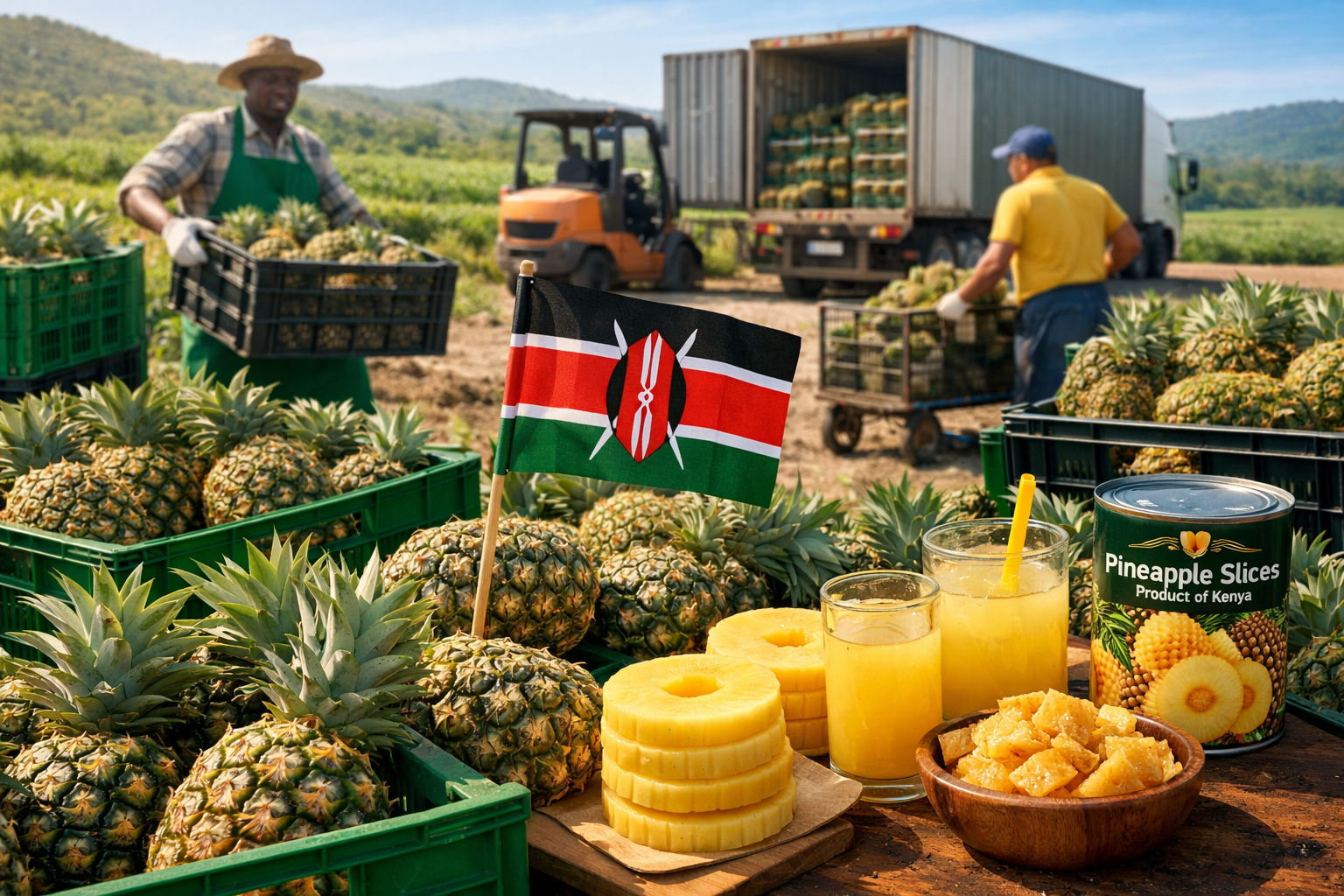
Pineapple Export Kenya: Opportunities, Trends & Strategic Growth
Introduction
Pineapple export Kenya has emerged as a dynamic and profitable segment within the nation’s agricultural export portfolio. With favourable climatic conditions, fertile soils, and a growing global demand for tropical fruits, Kenya is steadily positioning itself as a competitive pineapple exporter on the African and international markets. Today, understanding the landscape, market drivers, challenges, and growth opportunities tied to pineapple export Kenya is crucial for farmers, exporters, investors, and policymakers alike.
The Importance of Pineapple Export Kenya
Agriculture remains the backbone of Kenya’s economy, contributing significantly to GDP, employment, and foreign exchange earnings. While crops like tea, coffee, and horticultural vegetables have long dominated the export scene, pineapple export Kenya has gained prominence due to rising global demand for tropical fruits and value‑added products.
Pineapple export Kenya benefits the economy by:
-
Generating foreign exchange from fresh fruit, processed products, and juice concentrate exports.
-
Creating employment, particularly in rural production zones and processing facilities.
-
Driving agricultural innovation in irrigation, pest control, and packaging practices.
-
Supporting smallholder and commercial farming systems that enhance rural livelihoods.
Kenya’s unique tropical and subtropical climate enables year‑round production, giving exporters a competitive advantage in supplying markets that experience seasonal production gaps.
Pineapple Production in Kenya: Overview & Trends
Pineapple farming in Kenya dates back decades and has evolved significantly. Production centres are geographically diverse, spanning central highlands, the coastal belt, and parts of western Kenya.
Production Zones
-
Central Highlands (Thika, Murang’a, Kiambu) – Hub of large plantations and export‑oriented cultivation.
-
Coastal regions (Kilifi, Kwale, Taita Taveta) – Produce mainly for local markets and processing industries.
-
Western Kenya (near Lake Victoria) – Smallholder‑led production supporting regional trade.
FAOSTAT and other agricultural data sources show Kenya consistently producing several hundred thousand tonnes of pineapples annually, though production figures can fluctuate year‑to‑year due to weather, market, and input costs.
Varieties and Quality Standards
For pineapple export Kenya, the choice of variety is a core determinant of market success. The most critical varieties include:
-
MD2 (Sweet Pineapple) – Preferred for the fresh export market due to its sweetness, long shelf life, and uniform size.
-
Smooth Cayenne – Versatile for both fresh consumption and processing but often targeted at traditional markets.
Exporters focus heavily on quality standards and grading to meet international buyer expectations:
Standard Grading Metrics
| Grade | Diameter | Length | Common Use |
|---|---|---|---|
| Grade 1 | ≥ 12.7 cm | ≥ 15.3 cm | Premium fresh export |
| Grade 2 | ≥ 10.8 cm | ≥ 13.3 cm | Export & local markets |
| Grade 2½ | ≥ 8.9 cm | ≥ 11.4 cm | Local & processing |
Meeting size, appearance, sweetness, and absence of residues is essential for global buyers. Poor quality can result in rejection at foreign ports, leading to heavy financial losses.
Export Markets & Trade Routes
Key International Destinations
Kenya’s pineapple export markets include:
-
Middle East: United Arab Emirates (UAE), Saudi Arabia, Qatar.
-
European Union: Netherlands, France, Germany, UK.
-
Other Global Customers: Egypt, Israel, Kuwait, Oman, Jordan.
The EU remains a critical destination due to its appetite for canned pineapples and year‑round fresh fruit supplies. Kenya benefits from bilateral trade agreements such as the Economic Partnership Agreement (EPA), which offers duty‑free access for certain export products.
Export Volumes & Value
Recent market analyses highlight Kenya as Africa’s leading pineapple exporter, accounting for nearly half of the continent’s export volume (approx. 44,000 tonnes or 47‑49% of total African exports).
Value‑wise, Kenyan pineapple exports were estimated at approximately USD 34 million, underscoring strong growth over the last decade.
Pineapple Value Addition & Processing
Export diversification is a powerful way to increase value and market resilience for pineapple export Kenya. Beyond fresh fruit exports, value‑added products include:
-
Canned pineapples
-
Juice concentrate
-
Frozen pineapple chunks (IQF)
-
Dried pineapple and ready‑to‑eat snacks
Investments by local processors like Del Monte Kenya have expanded Kenya’s capacity to handle fresh and processed exports. Recent advancements include a $4 million IQF line that boosts frozen fruit exports to Europe and other overseas markets.
Regulatory and Certification Framework
Exporting fresh produce like pineapples requires rigorous adherence to standards and documentation to comply with international sanitary and phytosanitary measures.
Key Requirements
-
Registration of production sites and pack houses with the Kenya Plant Health Inspectorate Service (KEPHIS).
-
Phytosanitary certification to confirm pest‑free status.
-
Continuous pest monitoring and Integrated Pest Management (IPM) documentation.
-
GlobalG.A.P. or equivalent certifications for quality assurance and traceability.
Failing to comply with these measures can lead to shipment rejection or import bans, which is why many exporters invest in robust quality control and traceability systems.
Logistics, Infrastructure & Export Readiness
Pineapple export Kenya requires efficient logistics to preserve freshness and nutritive quality:
Transport & Handling
-
Cold chain logistics, including pre‑cooling and refrigerated containers, are essential.
-
Sea freight via the Port of Mombasa connects Kenyan exporters to Europe, Middle East, and beyond.
-
Air freight offers faster delivery for high‑value fresh fruit but at a higher cost.
Investments in road networks, pack houses, and cold storage facilities continue to improve Kenya’s ability to serve time‑sensitive markets.
Challenges Facing Pineapple Export Kenya
Despite steady growth, several challenges affect pineapple export Kenya:
1. Price Volatility & Market Competition
Global pineapple markets are dominated by producers like Costa Rica, the Philippines, and Indonesia, which benefit from economies of scale.
2. Infrastructure Gaps
Cold storage and processing facilities remain limited outside major commercial hubs.
3. Smallholder Integration
Many smallholder farmers lack access to finance, quality planting materials, and export‑ready certification. These limitations reduce their ability to sell directly into lucrative export supply chains.
4. Regulatory Costs
Export compliance involves significant paperwork, inspections, and certifications, which can be cost‑intensive for new and small exporters.
Growth Strategies for Pineapple Export Kenya
To strengthen Kenya’s position in global markets and expand export volumes, several strategic approaches are essential:
1. Strengthening Farmer Cooperatives
Aggregating smallholder volumes improves consistency in supply and quality, making Kenya’s pineapple export products more competitive.
2. Investing in Processing
Expanding local processing for canned, frozen, and juice products will diversify export offerings and improve value addition.
3. Enhancing Quality & Traceability
Adopting international standards like GlobalG.A.P, HACCP, and ISO strengthens trust with buyers and opens access to premium markets.
4. Expanding Market Access
Targeting emerging markets in Asia and the Americas diversifies risk and reduces dependency on traditional buyers.
5. Government Support & Trade Promotion
Favourable trade policies, export incentives, and investment in infrastructure can enhance pineapple export Kenya and drive innovation.
Future Outlook
With rising global demand for tropical fruits and greater consumer preference for healthier foods, pineapple export Kenya stands poised for growth. Projections in agricultural trade indicate continued increases in global pineapple markets, though competition remains intense. Kenya’s share of African pineapple exports and its rising quality standards position it well to take advantage of these trends.
Conclusion
Pineapple export Kenya is more than a trade—it is a strategic agricultural venture with vast potential to transform rural economies, enhance foreign exchange earnings, and create sustainable value chains. From adopting improved varieties like MD2 to investing in processing infrastructure and quality systems, Kenya’s pineapple industry is ready to compete on the global stage. For farmers, exporters, and investors alike, pineapple export Kenya offers opportunities that are ripe for the picking—literally and figuratively.