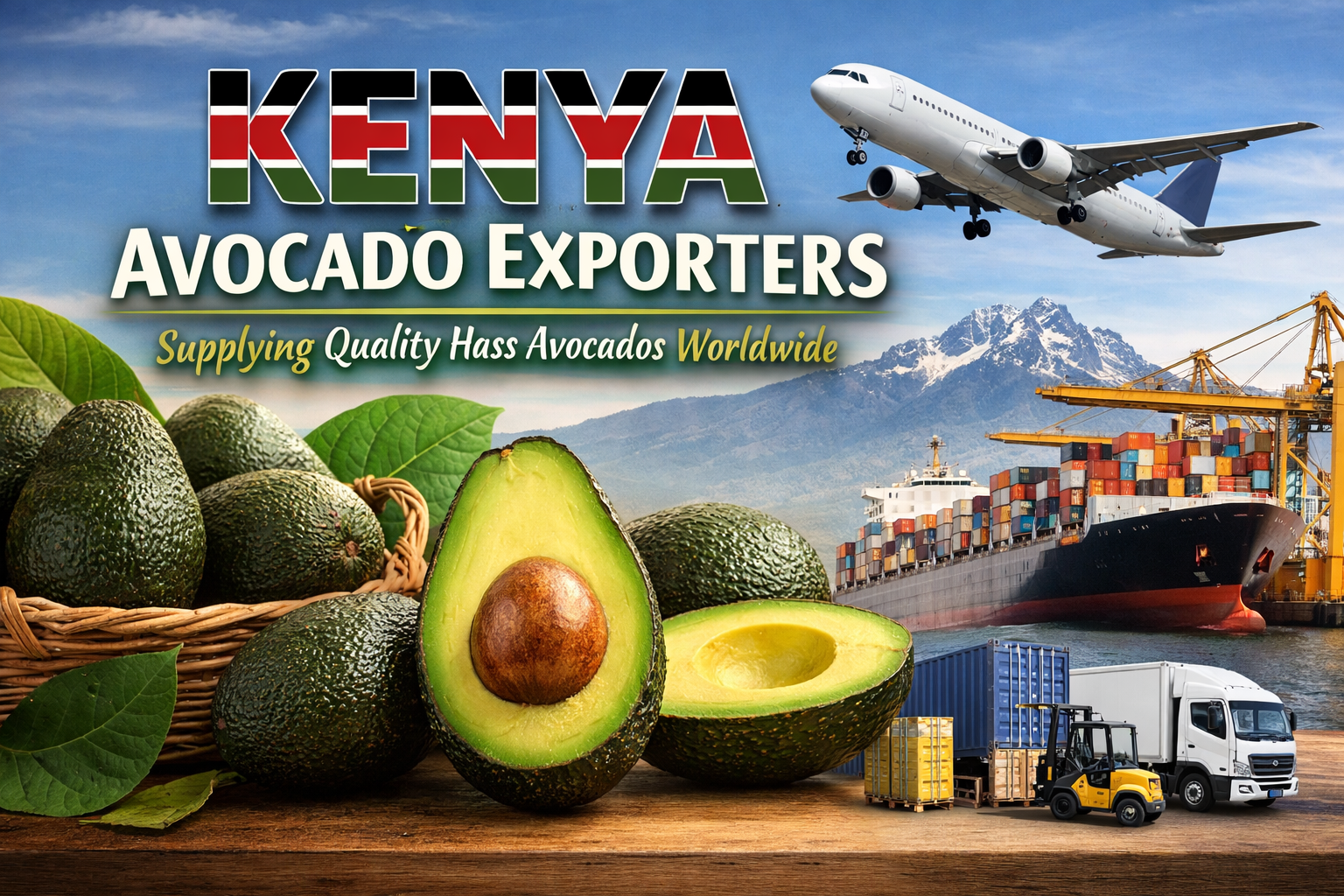
Kenya Avocado Exporters: A Complete Guide to Quality, Market Access, & Growth
Africa has increasingly become a major player in the global horticultural exports sector. Among the continent’s rising stars is Kenya, a country that’s rapidly gaining recognition as one of the world’s leading avocado exporters. With ideal climatic conditions, reliable growing seasons, and a network of dedicated exporters committed to quality and sustainability, Kenya plays a crucial role in meeting global demand for avocados.
Why Kenya Is Emerging as a Key Avocado Exporter
Kenya’s ascent in the global avocado trade didn’t happen by accident. Several factors contribute to the country’s growing reputation as one of the best hubs for avocado exports:
1. Ideal Agro‑Climatic Conditions
Kenya’s highlands receive the right amount of rainfall and have fertile volcanic soils, favoring avocado growth — especially the Hass variety, which is coveted globally for its rich flavor and long shelf life.
2. Favorable Export Seasons
Unlike Mexico and other major producers, Kenya benefits from a different harvesting window — typically from March to October — allowing it to supply markets when other producers are out of season. This advantage has made Kenya avocado exporters strategic partners for buyers in Europe, the Middle East, and Asia.
3. Strong Government Support
Through agencies such as the Horticultural Crops Directorate (HCD) and Kenya Plant Health Inspectorate Service (KEPHIS), smallholder farmers and larger growers have improved access to export certifications, quality assurance programs, and technical support.
4. Investment in Infrastructure
Kenya’s cold chain facilities, improved road networks, and expansion of air and sea cargo capacity in airports such as Jomo Kenyatta International Airport (Nairobi) and Port of Mombasa allow for efficient export logistics — crucial for maintaining fruit freshness during transit.
Top Regions for Avocado Production in Kenya
Kenya’s avocado production hotspots include:
-
Rift Valley (e.g., Nakuru, Uasin Gishu, Nandi)
-
Central Highlands (e.g., Kiambu, Murang’a)
-
Eastern Kenya (e.g., Meru, Embu)
These regions provide unique microclimates that support both early and late seasonal varieties, helping Kenya supply international markets for longer periods each year.
The Leading Varieties Exported by Kenya Avocado Exporters
Kenya produces several avocado types, but the most commercially significant varieties include:
1. Hass Avocado
-
The dominant export variety due to its creamy texture, nutrient profile, and excellent shelf life.
-
High demand in Europe, China, and Middle East markets.
-
Usually harvested from March through October.
2. Fuerte & Other Local Varieties
While not as export‑dominant as Hass, some exporters still supply other varieties, primarily for niche markets or local consumption. However, Hass remains the backbone of Kenya’s export strategy.
Kenya Avocado Exporters: Business Opportunities
Kenya’s avocado export sector presents lucrative opportunities for:
-
International importers and wholesalers
-
Retail supermarkets and fresh fruit distributors
-
Food processors seeking avocado oil or pulp
-
Agribusiness investors and venture capitalists
Working with established Kenya avocado exporters ensures quality fruit that meets stringent international standards — including phytosanitary requirements, accurate sizing, and proper packaging.
Quality Standards & Certifications for Export
Exporting fresh produce like avocados requires strict compliance with international quality standards. Reputable Kenya avocado exporters ensure compliance with:
Phytosanitary Certificates
Issued by KEPHIS, confirming that the produce is free from pests and diseases.
GlobalGAP Certification
Assures buyers that avocados were grown following strict Good Agricultural Practices (GAP).
Fairtrade & Organic Certifications
Optional but highly valued in European and North American markets — these appeal to ethically conscious buyers.
Packaging & Logistics: How Kenya Avocado Exporters Ship Globally
To maintain quality during long transit times, exporters adopt careful packaging and logistics processes:
Pre‑Cooling & Cold Chain
Avocados are often pre‑cooled to slow ripening and extend freshness. Cold chain systems ensure temperatures remain constant.
Standard Export Packaging
Fruits are carefully graded, sized, and packed in ventilated cartons or crates, meeting International Maritime Organization (IMO) and airline cargo regulations.
Air & Sea Freight
-
Air freight is used for priority markets and faster delivery.
-
Sea freight is more economical for bulk shipments, especially to European markets.
Traceability & Documentation
Export documentation includes:
-
Packing lists
-
Phytosanitary certificates
-
Bill of lading or airway bill
-
Certificates of origin
These ensure seamless customs clearance and build trust with import partners.
Key Export Destinations for Kenya Avocados
Kenya’s avocado exporters serve markets across the globe:
1. Europe
The largest market for Kenyan avocados. Countries like the Netherlands, UK, Germany, and France import significant volumes.
2. Middle East
Countries such as UAE, Saudi Arabia, and Qatar have growing demand, often supplied via air freight.
3. Asia
China and Southeast Asian markets are rapidly growing importers, attracted by the fruit’s quality and nutritional appeal.
4. North America
Although smaller compared to European imports, demand in the United States and Canada is increasing — especially for premium Hass avocados.
Pricing Trends for Kenya Avocado Exporters
While pricing fluctuates due to seasonality and global supply, several factors influence export prices:
-
Harvest volumes and quality
-
Shipping costs (air vs. sea)
-
Currency exchange rates
-
Market demand trends
-
Trade policies and import tariffs
Understanding pricing trends helps both exporters and buyers negotiate profitable contracts.
Challenges Facing Kenya Avocado Exporters
No sector is without its challenges. Key hurdles include:
1. Consistent Quality Control
Ensuring uniform size and maturity for export markets requires enhanced farm‑level management and post‑harvest handling.
2. Logistics & Cold Chain Gaps
Though improving, cold chain infrastructure still needs investment to reduce post‑harvest losses.
3. Climate Change Impacts
Weather variability — such as droughts or floods — affects production volumes and scheduling.
4. Trade Competition
Kenya competes with established exporters like Mexico, Peru, and South Africa, requiring focused quality differentiation and market access strategies.
Success Stories: Kenyan Exporters Making an Impact
Several Kenyan agribusinesses have built strong reputations in the avocado export sector. These companies exemplify how quality, consistency, and international compliance can open doors to premium markets. Often, these exporters:
-
Partner with smallholder cooperatives
-
Invest in traceability systems
-
Maintain direct relationships with overseas buyers
-
Adopt sustainable environmental practices
Because of their efforts, Kenya’s export volumes have grown year after year — transforming local livelihoods and elevating the country’s reputation as a reliable produce supplier.
Tips for Buyers Looking to Work with Kenya Avocado Exporters
If you are an international buyer seeking Kenyan avocados, consider the following:
1. Verify Certifications
Ensure exporters have valid phytosanitary and GlobalGAP documentation.
2. Request Samples
Small sample orders help assess fruit quality, size, and taste before larger contracts.
3. Agree on Logistics
Clarify whether the exporter handles freight forwarding, cold chain management, and customs clearance.
4. Communicate Seasonal Schedules
Knowing harvest windows helps plan ordering and inventory needs effectively.
5. Consider Long‑Term Contracts
Stable agreements benefit both buyers and farm networks, enabling better pricing and planning.
The Future of Kenyan Avocado Exporters
The outlook for Kenya avocado exporters is promising:
-
Rising global demand for healthy, nutrient‑dense foods positions avocados as a desirable fruit.
-
Expansion of cold chain infrastructure and logistics services will decrease losses and improve delivery times.
-
Investment opportunities from private equity and development funds can boost farm productivity and export readiness.
Kenya’s strategic location and agricultural capacity make it well‑placed to continue climbing the ranks in the global avocado trade. As producers adopt new technologies — such as precision agriculture, better post‑harvest handling, and digital traceability — export quality and volumes will continue to grow.
Conclusion: Why Kenya Avocado Exporters Matter
With a combination of favorable climate, smart investments, and strong market demand, Kenya avocado exporters have cemented themselves as essential contributors to global fruit supply chains. Whether you are:
-
An importer seeking high‑quality Hass avocados
-
A retailer looking to diversify fresh produce offerings
-
An investor exploring agribusiness opportunities
Kenya offers competitive quality, reliable supply windows, and an ecosystem ready to expand.